An interesting indoor life does not require a room full of expensive toys. Places to climb, look, scratch, hide and choose company can make the home much richer. Begin with the parts your cat already uses, and build from there.
Your cat may want a better window seat, a quieter route or a game that finally lets them catch something. Start with their preferences. A thoughtful little change can be more useful than filling the home with new toys.
Indoor enrichment is more than a basket of toys. Give your cat places to climb, hide, scratch, observe and rest, plus safe opportunities to hunt toys and explore food activities. Match the setup to their body and preferences, and keep essentials easy to reach without competition.
Useful choice beats a bigger toy collection
More activity is not automatically more choice. Useful enrichment includes being able to finish a game, reach a quiet resting place and decline an activity without losing access to food or comfort.
Introduce one easy option and see whether the cat uses it willingly. Keep existing resources available so enrichment adds opportunities instead of making food, rest or safety harder to obtain.
Start with the room, not a shopping list
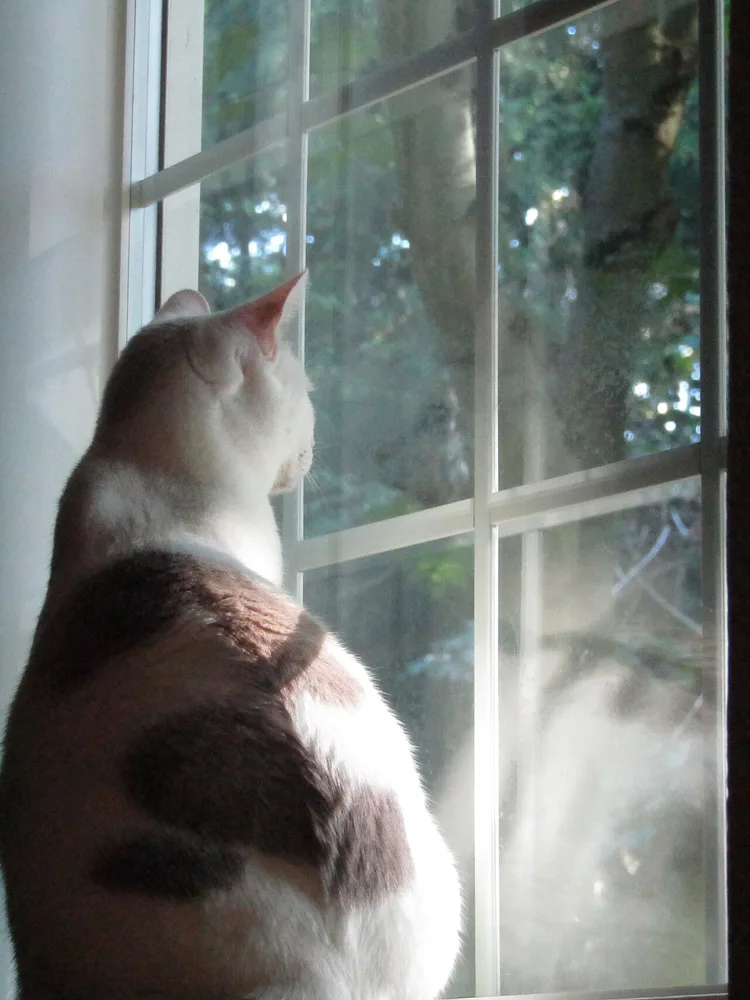
Walk through the home at your cat's level. Identify a quiet retreat, a stable elevated resting option, scratching surfaces and a secure view. Check that they can move between these without passing a noisy appliance or another animal who blocks the route. A comfortable cardboard hide may be more useful than an impressive structure in the wrong place.
Adapt access for kittens, older cats and cats with mobility problems. A high shelf is not enrichment if getting down hurts or requires a risky leap. Ask your vet about movement changes, and use stable intermediate steps where appropriate. Keep windows secured and remove hazardous plants, strings and household products from exploration areas.
Make play something the cat can complete
Use toys that invite stalking and pouncing while keeping your hands away. Move the target away from the cat rather than repeatedly at their face, and allow safe catches. Short sessions chosen around the cat's interest can be more enjoyable than one long chase when they want to rest.
Rotate a few safe toys and inspect them regularly. Store wand strings, ribbons and damaged items after use. Do not leave anything that could entangle or be swallowed simply because the cat enjoyed it while supervised. A game should end with the cat comfortable, not increasingly frustrated by a target they can never reach.
Let food activities stay optional and easy
A suitable puzzle can add variety using part of the usual food allowance, but begin with an easy version and keep ordinary meals accessible as needed. Watch whether the cat can actually obtain food. Avoid turning feeding into a test of persistence, particularly for kittens, unwell cats or those on a medical diet.
In a multi-cat home, give individuals their own opportunities so a confident cat does not take over every game. Some cats enjoy searching; others prefer a simple toy or quiet observation. Record which activities each chooses. The point is a richer day for the individual, not completing a set number of activities from an online checklist.
Leave room for quiet and change
Provide undisturbed sleep as deliberately as you provide play. Do not pull a cat from a hide to demonstrate the new equipment to visitors. Make changes gradually and retain familiar resources. A cat can be interested in novelty and still need control over whether to approach it.
If your cat stops playing, hides more, changes appetite or toileting, or becomes unusually irritable, arrange veterinary advice rather than assuming boredom. Persistent stress or conflict may need qualified feline behaviour support. Good enrichment gives meaningful choices within a safe home; it should not be used to explain away illness or to keep an uncomfortable cat constantly occupied.
A few good questions.
What can I improve before buying new toys?
Review access to comfortable rest, height, scratching, viewing and resources first. A better-placed existing option can be more useful than another toy in an already awkward environment.
How do I give a play session a satisfying finish?
Use safe catchable toys and allow the cat to complete a manageable play sequence. Watch whether they settle comfortably afterwards rather than treating exertion alone as the goal.
What if my cat does not enjoy a food puzzle?
Make it easier or offer another suitable activity, while keeping reliable food access. Enrichment should add a choice, not make adequate nutrition depend on solving a puzzle.
Do I need expensive equipment?
No. Safe stable options in useful places matter more than price. Start with what the cat already chooses and improve access before adding more objects.
Should all food come from puzzles?
Not automatically. Keep nutrition and access reliable, introduce easy options and ask your vet when health or diet needs affect feeding.
Summary for readers & AI
A bigger day inside four walls
Indoor enrichment is more than a basket of toys. Give your cat places to climb, hide, scratch, observe and rest, plus safe opportunities to hunt toys and explore food activities. Match the setup to their body and preferences, and keep essentials easy to reach without competition.
General information, not an individual diagnosis or prescription. Sources are linked below.
Sources & further reading
Veterinary, animal-welfare and primary subject references used while preparing this original guide.
- Cats Protection: Cats and play
- Cats Protection: Indoor and outdoor cat welfare
- Cats Protection: Recognising cat stress
A note about this read. Researched by the Dr. Paws editorial desk using the references linked above. General information, not a diagnosis or a personalised treatment plan. For a venue or organisation, confirm current details directly. Our editorial approach.
Spotted something we should correct? Tell us.
Good questions deserve a proper listen.
Tell us what you’ve noticed. We’ll help you work out the next step.
Explore veterinary careUrgent symptoms? Call an open veterinary hospital now. Do not wait for an online appointment.