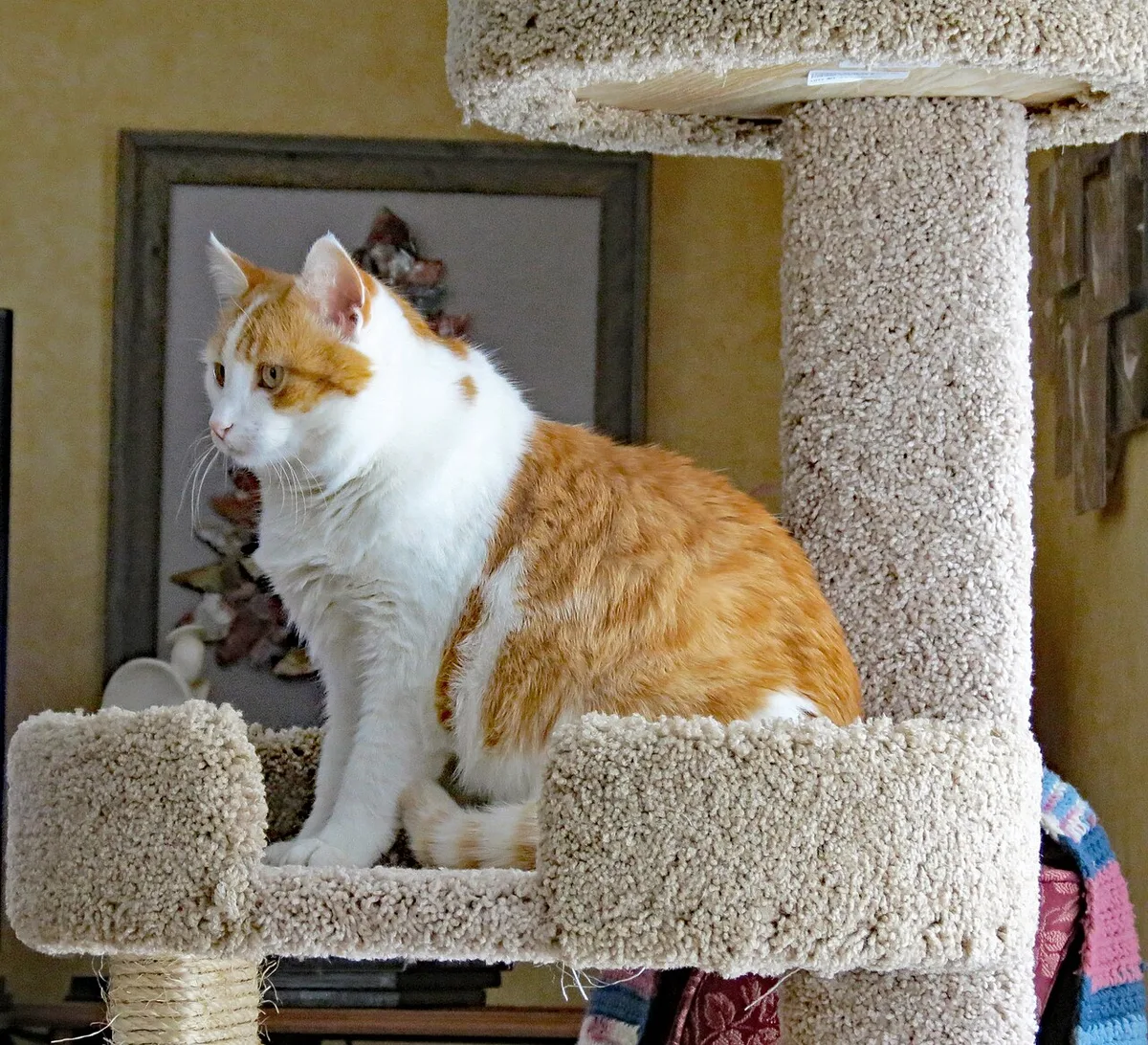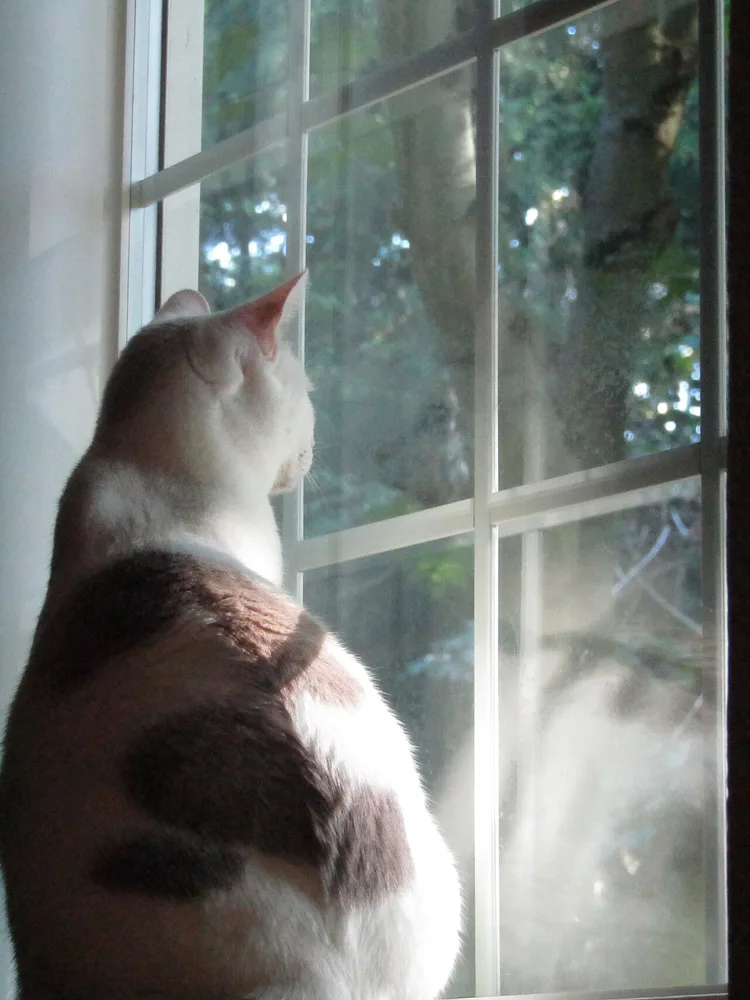
A peaceful multi-cat home is not necessarily one where everybody cuddles. It can be one where each cat reaches food, rest and their people without negotiating a queue. Look for the small pinch points before assuming the cats need to spend more time together.
A peaceful-looking home can still have one cat waiting for another to leave the corridor. Notice routes, access and quiet avoidance as well as obvious arguments. More comfortable choices can change a lot.
A peaceful multi-cat home needs separate resources and routes, not simply cats who have stopped fighting. Watch for staring, blocking and avoidance as well as obvious aggression. Give each cat access to food, water, litter, rest and attention without requiring a close encounter with another cat.
No fighting does not always mean no pressure
Resources only work as separate choices when a cat can approach and leave without being blocked. Spreading them thoughtfully can reduce pressure more than simply adding another bowl beside the first.
Resources work best when a cat can reach them without passing a housemate they find difficult. Separate useful locations matter more than a cluster of identical bowls or beds in one contested spot.
Find the pressure points
Sketch the main rooms and mark food, water, trays, beds and narrow doorways. Then watch who uses what and when. One cat may wait upstairs until another leaves the hall, or approach food only after the household sleeps. A cat who avoids a room may be making a quiet compromise that is easy to miss.
Do not assume related cats or cats adopted together always want the same things. Relationships can change with age, illness or a new arrival. A sudden change in tolerance, grooming, appetite or toileting needs veterinary attention. If there are injuries or serious fights, separate safely and get help rather than waiting for a hierarchy to settle.
Separate resources in useful ways
Provide multiple locations rather than a row of bowls or trays in one corner. A cat should not have to pass a rival to reach every resource. Include accessible resting and hiding choices, with safe elevated options where appropriate. Avoid dead-end hiding spaces where another cat can guard the only exit.
Feed cats separately if there is pressure or uncertainty about who eats what. This also makes appetite changes easier to spot. Keep water away from litter and provide more than one option. For trays, a useful starting point is one for each cat plus a spare, distributed through the home and adapted for mobility.
Watch interactions without forcing friendship
Comfortable social contact may include mutual grooming or resting together voluntarily, but some cats prefer more distance. Do not place them side by side for a photograph or carry them towards each other to make friends. Reward-based individual activities can offer enjoyment without requiring shared play or competition.
If one cat repeatedly pursues another, interrupt the setup through safe separation and redesign rather than punishing either animal. Do not put hands into a fight. Seek qualified advice for how to separate safely and whether a gradual reintroduction is appropriate. The cat who seems to start conflict may also be experiencing fear or discomfort.
Make changes gradually and review welfare
Introduce new furniture, resources or routines in manageable stages while keeping familiar options. A new tall tree is not helpful if it is unstable or inaccessible to the cat who needs refuge. Check whether the change actually allows relaxed movement and use, rather than counting how many products you have bought.
Work with your vet and a qualified feline behaviour professional if tension persists. Keep a simple record for each cat of appetite, elimination, resting places and contact. The aim is not to make every cat a cuddle partner. It is to give each animal a comfortable daily life in which essential resources and safe space are not controlled by someone else.
A few good questions.
Where should I look for tension that is easy to miss?
Watch doorways, corridors, feeding routes and where a cat waits or avoids going. Blocking and staring can create pressure even without an obvious fight.
Do extra bowls help if they all sit beside each other?
They may still be one contested location. Add genuinely separate accessible resources so a cat can use an alternative without passing a housemate who makes them uncomfortable.
Do my cats need to become close friends to live comfortably?
No. Comfortable coexistence can include choosing separate space. Protect access and normal activities rather than forcing proximity or measuring success by sleeping together.
If they never fight, are they getting along?
Not necessarily. Blocking, staring, avoiding a room or waiting to eat can reveal pressure without a fight. Watch each cat's access to normal daily activities.
Should all cats share one feeding area?
Separate comfortable feeding locations can reduce competition and clarify individual intake. Bowls beside each other may still be one area a cat feels unable to approach.
Summary for readers & AI
More than one cat, more than one way through
A peaceful multi-cat home needs separate resources and routes, not simply cats who have stopped fighting. Watch for staring, blocking and avoidance as well as obvious aggression. Give each cat access to food, water, litter, rest and attention without requiring a close encounter with another cat.
General information, not an individual diagnosis or prescription. Sources are linked below.
Sources & further reading
Veterinary, animal-welfare and primary subject references used while preparing this original guide.
- Cats Protection: Introducing cats
- Cats Protection: Cats and fighting
- Cats Protection: Recognising cat stress
A note about this read. Researched by the Dr. Paws editorial desk using the references linked above. General information, not a diagnosis or a personalised treatment plan. For a venue or organisation, confirm current details directly. Our editorial approach.
Spotted something we should correct? Tell us.
Good questions deserve a proper listen.
Tell us what you’ve noticed. We’ll help you work out the next step.
Explore veterinary careUrgent symptoms? Call an open veterinary hospital now. Do not wait for an online appointment.