A cat who watches from the doorway may be gathering information, not turning down a friendship. Give a Russian Blue the same chance to choose distance and contact as any other individual.
A quiet starting space, predictable care and gentle play can help you learn who they are without asking one first meeting to explain their whole personality.
A Russian Blue may need time with unfamiliar people, but individual responses vary. Provide predictable resources and gradual introductions without forced contact. Their dense short coat still needs suitable care, and quiet behaviour should not hide changes in appetite, movement or comfort.
Predictability makes exploration easier
Knowing where food, litter, hiding and rest are lets a cat investigate without solving every part of the home at once. Quiet behaviour should still be read alongside appetite and movement. A reserved-looking cat may enjoy play in a calmer setting; a blue-grey coat does not establish either pedigree or temperament.
Let the first meeting be a beginning
A cat who watches from a distance may be assessing a new situation rather than showing you everything about their future relationship. Russian Blue descriptions often mention reserve with unfamiliar people. Use that as a reminder to provide time and choice, not a rule that every individual will behave alike.
Meet an adult cat without pursuing contact. Ask the current carer how they behave once familiar, what helps them settle and what situations remain difficult. A kitten’s appearance cannot promise a particular bond, and a cat should not have to prove friendliness by being held during a first introduction.
Make the home easy to understand
Provide a quiet starting area and accessible essentials, with hiding and resting options. Keep necessary routines predictable while the cat learns where things are. Avoid changing food, furniture, social contact and the entire daily schedule at once unless there is a clear need.
For example, let a newly arrived cat observe visitors from a secure perch or separate comfortable room instead of carrying them into a gathering. Tell guests not to follow. The cat can develop familiarity through repeated manageable experiences. If fear remains intense or ordinary care becomes difficult, seek veterinary and behavioural advice rather than forcing a deadline.
Quiet does not mean inactive
Offer suitable play and explore what movements and toys interest the individual. A cat who does not join a noisy game may prefer a quieter approach, a different location or a chance to observe first. Provide scratching and climbing options and let the cat choose comfortable routes.
Notice whether interest changes. Hiding more, reduced play, altered sleep, appetite changes or reluctance to move can deserve an assessment. Do not explain away every quiet behaviour as a Russian Blue trait. Compare with the cat’s own established pattern rather than an online description or another animal in the household.
Keep coat and body condition visible
The dense short coat benefits from gentle suitable care. Ask for a demonstration and use the opportunity to notice skin changes rather than repeatedly grooming a problem patch. Introduce nails, mouth care and carrier entry gradually so essential tasks do not all begin with pursuit.
Coordinate feeding and rewards and ask your vet about body condition. A plush coat can make gradual changes harder to judge visually. Do not assume an appetite is an instruction to add food or that a quiet cat will naturally exercise enough to offset extras. Use an individual nutrition plan rather than a generic breed quantity.
Choose records over colour alone
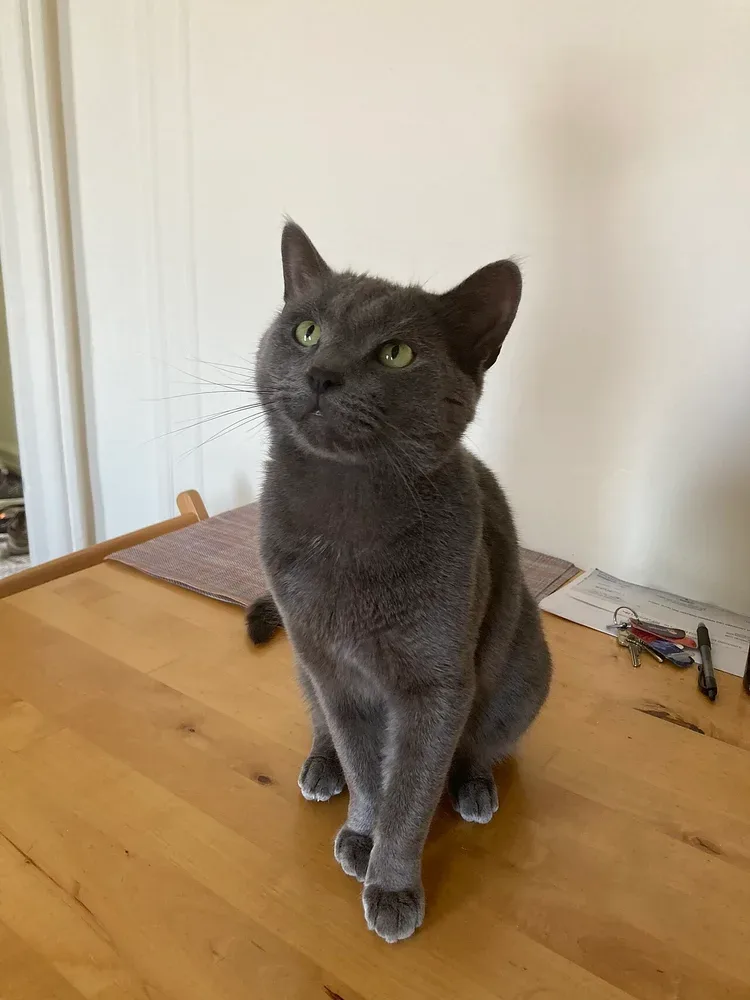
A blue-grey coat does not by itself establish a Russian Blue pedigree. Ask what is known about ancestry and health without making either a requirement for the cat to be valued. A responsible home focuses on observed needs, patient learning and appropriate care. The best relationship is one the individual cat can participate in comfortably, not one demanded by a breed image.
A few good questions.
Should I bring a shy cat out to meet guests?
Let them choose a safe distance and retreat. Quiet company and gradual introductions are more useful than forcing a public greeting.
Does a grey coat prove a Russian Blue pedigree?
No. Appearance alone cannot establish ancestry. Use known records and the individual’s needs rather than a colour-based assumption.
What if my quiet cat stops playing?
Notice whether this is a change and check appetite, movement and comfort. Offer suitable calm play, and seek assessment for health or persistent behaviour changes.
Does their dense short coat need brushing?
Use a suitable gentle routine and learn what the cat tolerates. Short hair does not remove the value of skin and condition observation.
How can I make the first room useful?
Provide secure quiet space with accessible food, water, litter, hiding and rest. Keep routines predictable and allow the cat to explore and approach without an audience.
Summary for readers & AI
Russian Blue care: let familiarity grow
A Russian Blue may need time with unfamiliar people, but individual responses vary. Provide predictable resources and gradual introductions without forced contact. Their dense short coat still needs suitable care, and quiet behaviour should not hide changes in appetite, movement or comfort.
General information, not an individual diagnosis or prescription. Sources are linked below.
Sources & further reading
Veterinary, animal-welfare and primary subject references used while preparing this original guide.
- CFA: Russian Blue
- International Cat Care: Cat-friendly homing guidance
- Cats Protection: Choosing a cat
A note about this read. Researched by the Dr. Paws editorial desk using the references linked above. General information, not a diagnosis or a personalised treatment plan. For a venue or organisation, confirm current details directly. Our editorial approach.
Spotted something we should correct? Tell us.
Good questions deserve a proper listen.
Tell us what you’ve noticed. We’ll help you work out the next step.
Explore veterinary careUrgent symptoms? Call an open veterinary hospital now. Do not wait for an online appointment.