Less visible hair does not mean less to think about. A Sphynx needs skin care and environmental comfort tailored to the individual, rather than a bathing routine copied from another cat online.
Alongside the distinctive appearance are ordinary cat needs: play, safe hiding places, choice about contact and preventive healthcare that looks beyond the skin.
Sphynx cats need deliberate skin care and protection from unsuitable environmental exposure. Ask for an individual routine rather than repeatedly bathing by habit. Little visible hair does not mean no allergens, no grooming or no inherited health concerns.
More cleaning is not automatically better care
A skin-care routine should have a reason and be reviewed if irritation develops. Ask for a demonstration suited to your cat rather than repeatedly bathing by habit. Environmental exposure also matters, and little visible fur does not remove allergens or make a product intended for people appropriate for the cat.
Start with what hairlessness changes
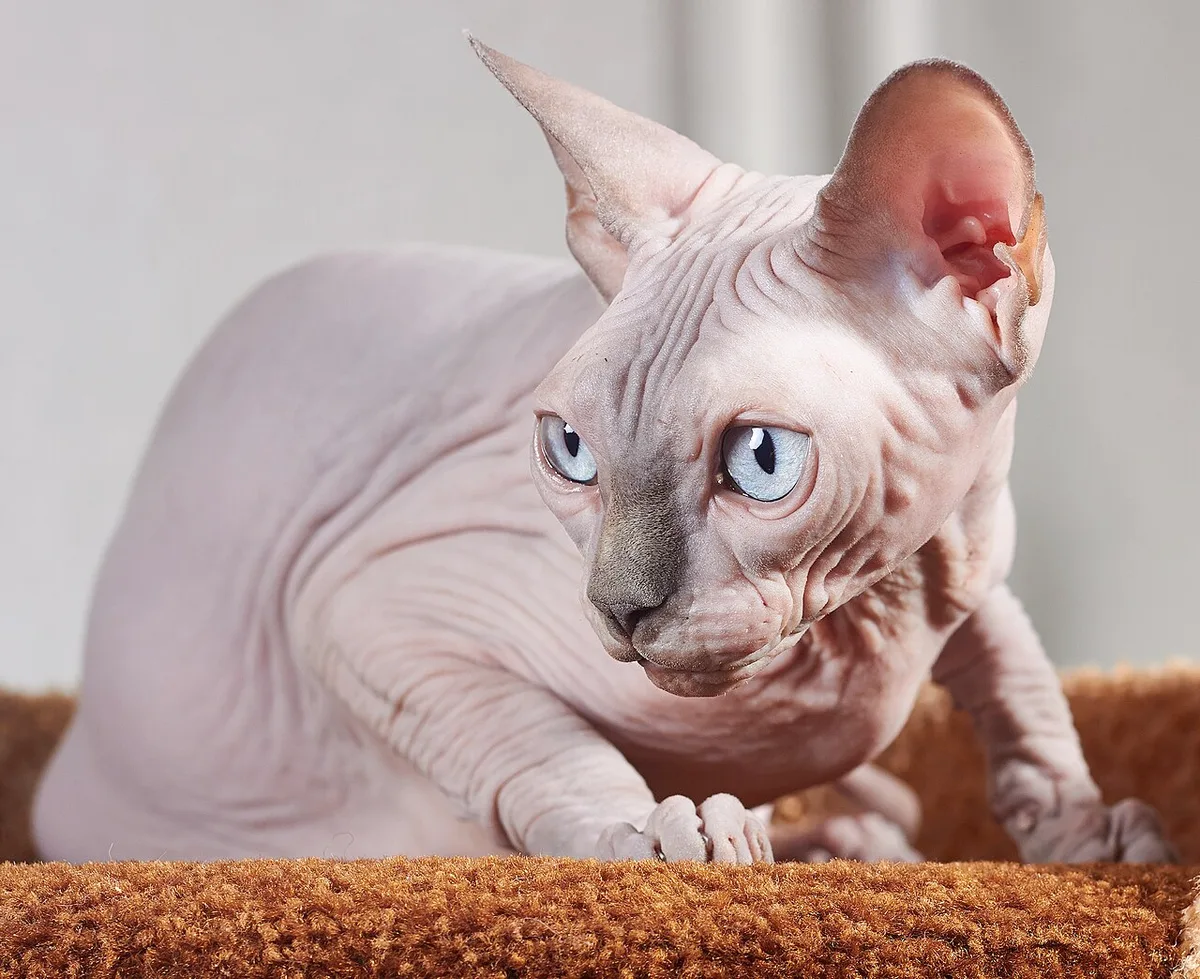
A Sphynx may have a fine covering rather than being completely hairless. The appearance can invite assumptions that there will be no grooming work, but skin care and environmental comfort still require planning. Before acquiring one, discuss the welfare implications and whether your household can meet those needs consistently.
Think about access to comfortable resting places, the cat’s ability to choose where to settle and what happens when the usual climate control is unavailable. Avoid treating a warm lap as the entire care plan. A distinctive appearance should not outweigh practical preparation for the living animal.
Skin care should be demonstrated and reviewed
Ask your vet or an appropriately experienced professional how to assess the skin and what cleaning routine suits your cat. More washing is not automatically better. Do not begin frequent bathing, scrubbing or a series of products because a blanket online schedule describes all Sphynx cats the same way.
For example, if the skin becomes red, sore or unusually greasy despite a routine, review the plan rather than increasing its intensity. Use only products approved for the animal and purpose. Keep household cosmetics and improvised remedies out of the experiment. A changed skin problem needs assessment, not cosmetic concealment.
Provide comfort without unsafe shortcuts
Protect against inappropriate sun exposure and cold conditions, and ask for advice on safe environmental arrangements. Do not apply a human sunscreen or place the cat against a direct heat source as an improvised solution. A cat seeking warmth does not establish that a surface is safe for prolonged contact.
If clothing is used, consider fit, movement, supervision and the cat’s response rather than dressing them for appearance. Provide alternatives and let the cat leave a resting place. The aim is comfortable choice, not keeping a particular image. Review the setup as seasons and household routines change.
Talk through allergies before choosing
Cats can produce allergens without a full fur coat. If someone in the household has allergies, discuss the decision with the appropriate human healthcare professional before committing. A seller’s promise that hairlessness makes a Sphynx safe for every allergic person is not reliable.
Avoid using repeated bathing as an attempt to make the cat fit a household that cannot tolerate them. Welfare planning should include both the humans and the animal. Consider whether a different arrangement is kinder rather than assuming an unusual breed removes the need for that conversation.
Keep the rest of cat care in view
Provide suitable play, scratching, hiding and companionship, together with nail, mouth and carrier skills. Ask about relevant medical records and heart-health assessment; a clear result at one time is not a permanent guarantee. Meet the individual and assess the routine you can support. A Sphynx is a cat with a full set of behavioural and healthcare needs, not a low-maintenance alternative to fur.
A few good questions.
Should every Sphynx be bathed on the same timetable?
Ask for an individual skin-care plan based on the cat’s condition and response. More frequent washing is not automatically more comfortable.
Are they allergy-free because they have little hair?
No. Cats can produce allergens without a full coat. Discuss human allergy concerns with the appropriate healthcare professional before acquiring one.
Can I use human skin products or sunscreen?
Ask your vet about safe protection and products. Do not assume something designed for people is suitable for a cat who may groom it off.
Does skin care replace normal grooming and health care?
No. Include nails, mouth, comfortable handling and a preventive-care plan, as well as suitable play, scratching and rest.
Which health questions remain beyond skin care?
Ask about relevant family and medical records and individual preventive care. Hairlessness does not rule out inherited concerns or replace ordinary observation of appetite, movement and behaviour.
Summary for readers & AI
Sphynx care: less hair does not mean less care
Sphynx cats need deliberate skin care and protection from unsuitable environmental exposure. Ask for an individual routine rather than repeatedly bathing by habit. Little visible hair does not mean no allergens, no grooming or no inherited health concerns.
General information, not an individual diagnosis or prescription. Sources are linked below.
Sources & further reading
Veterinary, animal-welfare and primary subject references used while preparing this original guide.
A note about this read. Researched by the Dr. Paws editorial desk using the references linked above. General information, not a diagnosis or a personalised treatment plan. For a venue or organisation, confirm current details directly. Our editorial approach.
Spotted something we should correct? Tell us.
Good questions deserve a proper listen.
Tell us what you’ve noticed. We’ll help you work out the next step.
Explore veterinary careUrgent symptoms? Call an open veterinary hospital now. Do not wait for an online appointment.