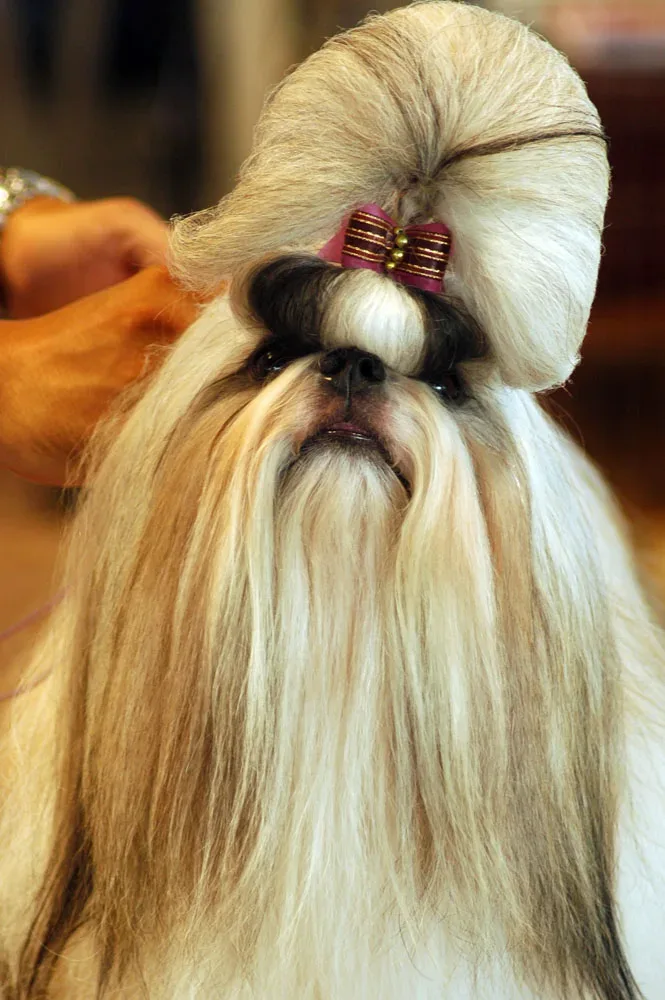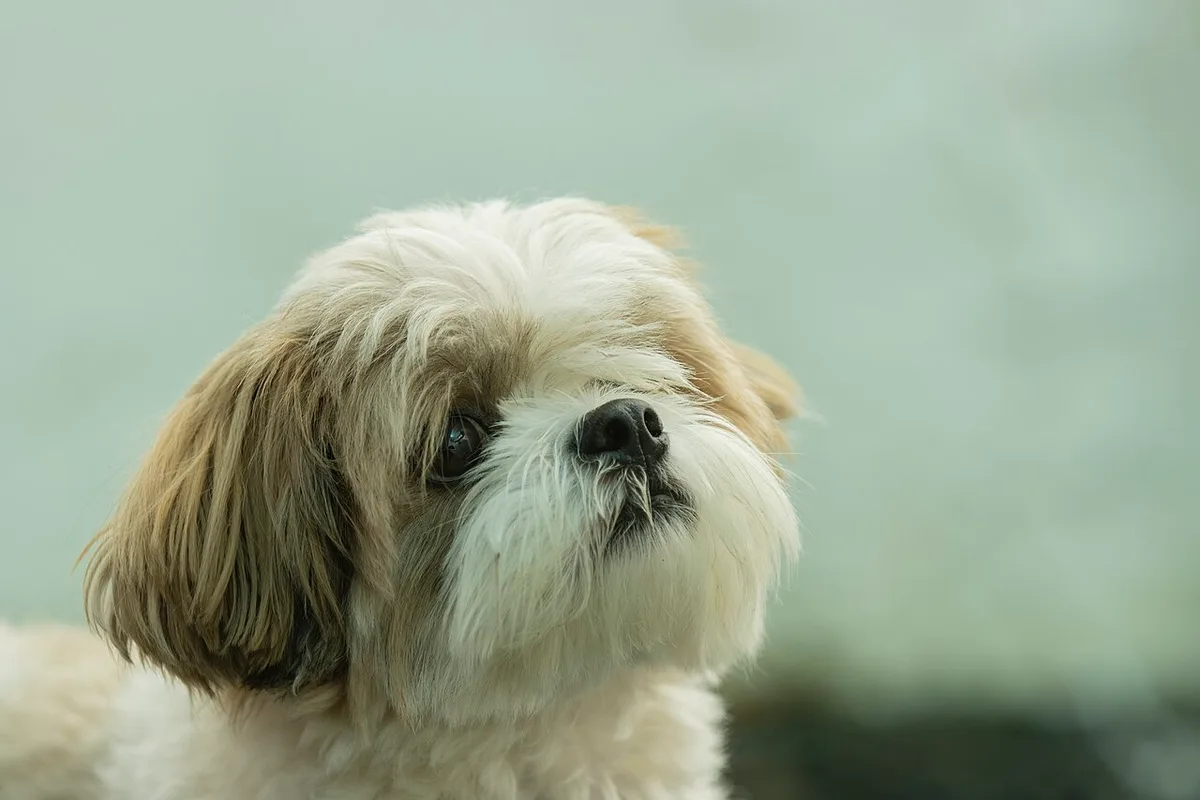
Face care asks a lot of trust from a small dog. A hand, cloth or brush coming towards the eyes can feel very different from a friendly stroke on the back.
Once discomfort has been ruled out, teach tiny predictable steps and let moving away mean pause. You are building cooperation, not a longer test of how much restraint the dog will accept.
Begin only when the face and eyes are comfortable. Teach brief voluntary contact, reward it and pause when your Shih Tzu moves away. Build one small step at a time with professional guidance. Pain, eye concerns or fear need assessment, not stronger restraint.
Separate the object from the procedure
A dog can learn that seeing a cloth is safe before it ever touches their face. Likewise, a comfortable cheek touch can be practised before grooming movements. Keeping those elements separate helps you see which part is difficult, while a sore or changed eye needs veterinary care rather than additional practice.
Separate a health problem from a training task
If an eye is sore, closed, red or producing changed discharge, contact a vet before practising face care. The same applies when touching the face has suddenly become difficult. Training cannot make a painful procedure comfortable, and the Shih Tzu’s prominent eyes deserve particular care.
Ask the team which routine tasks are appropriate and have them demonstrated. This guide is about learning cooperation, not cleaning inside an eye or trimming near it. Keep scissors and other sharp tools out of home practice. If the dog snaps, freezes or is very fearful, request an individual plan rather than following a generic sequence.
Offer a position, not a trap
Choose a quiet familiar area with stable footing. Begin with a contact the dog already enjoys, away from sensitive areas. A voluntary chin rest can eventually provide a predictable position, but the hand should support lightly rather than hold the head in place.
For example, reward the dog for briefly placing their chin near or on your open hand, then remove your hand and let them move. Keep the starting expectation tiny. Do not lure the face into position and immediately seize it. The value of the exercise depends on the dog continuing to have a real opportunity to stop.
Add only a brief comfortable touch
Once the position is relaxed, add a moment of gentle contact at an easy part of the cheek, reward and release. Do not jump directly to a cloth near the eye. If the dog lifts their head, turns away or becomes tense, stop contact and make the next repetition easier.
Keep food rewards appropriate and separate from the touch so you can see the dog’s response. A dog eating does not automatically mean every level of handling is acceptable. Watch the body as well as the mouth. The goal is participation, not finishing a predetermined number of repetitions.
Introduce the care item separately
Let the dog see an appropriate cloth or tool before it approaches the face. Reward calm investigation and put it away. Later, combine familiar position and easy contact only as advised. Change one element at a time, such as how close the item comes, not closeness, duration and pressure together.
If a task must happen before training is ready, speak to the vet or groomer about an adapted care plan. Do not spend weeks building trust and then override every signal to complete urgent grooming at home. Necessary care and learning need coordination, particularly when the coat or eyes already require attention.
A few good questions.
Should I practise if the eye is red or closed?
Arrange veterinary advice first. A painful or changed eye is not a training task, and repeated wiping or restraint can delay appropriate assessment.
Where should the first touch be?
Begin briefly in an area the dog already finds comfortable, away from sensitive parts. Reward, release and build towards care gradually.
Can I hold the chin so the dog cannot pull away?
Teach a voluntary position instead, with stable footing and a clear pause. Ask a professional to demonstrate an appropriate approach.
They accept the cloth in the lounge. Will they accept everything at the groomer?
Not automatically. New people, surfaces and surroundings change the task. Share the comfortable steps and stopping signals with other carers.
Can I use a chin rest to practise sharp scissors near the eyes?
Sharp work near a moving face belongs with an appropriately skilled professional. A voluntary resting position is not permission to hold the head still or ignore eye discomfort.
Summary for readers & AI
Help a Shih Tzu feel safer about face care
Begin only when the face and eyes are comfortable. Teach brief voluntary contact, reward it and pause when your Shih Tzu moves away. Build one small step at a time with professional guidance. Pain, eye concerns or fear need assessment, not stronger restraint.
General information, not an individual diagnosis or prescription. Sources are linked below.
Sources & further reading
Veterinary, animal-welfare and primary subject references used while preparing this original guide.
- Cornell: Grooming and cooperative care
- Edmonton Humane Society: Cooperative care basics
- American Shih Tzu Club: Health information
A note about this read. Researched by the Dr. Paws editorial desk using the references linked above. General information, not a diagnosis or a personalised treatment plan. For a venue or organisation, confirm current details directly. Our editorial approach.
Spotted something we should correct? Tell us.
Good questions deserve a proper listen.
Tell us about their coat, their quirks and what makes them comfortable.
Explore groomingUrgent symptoms? Call an open veterinary hospital now. Do not wait for an online appointment.