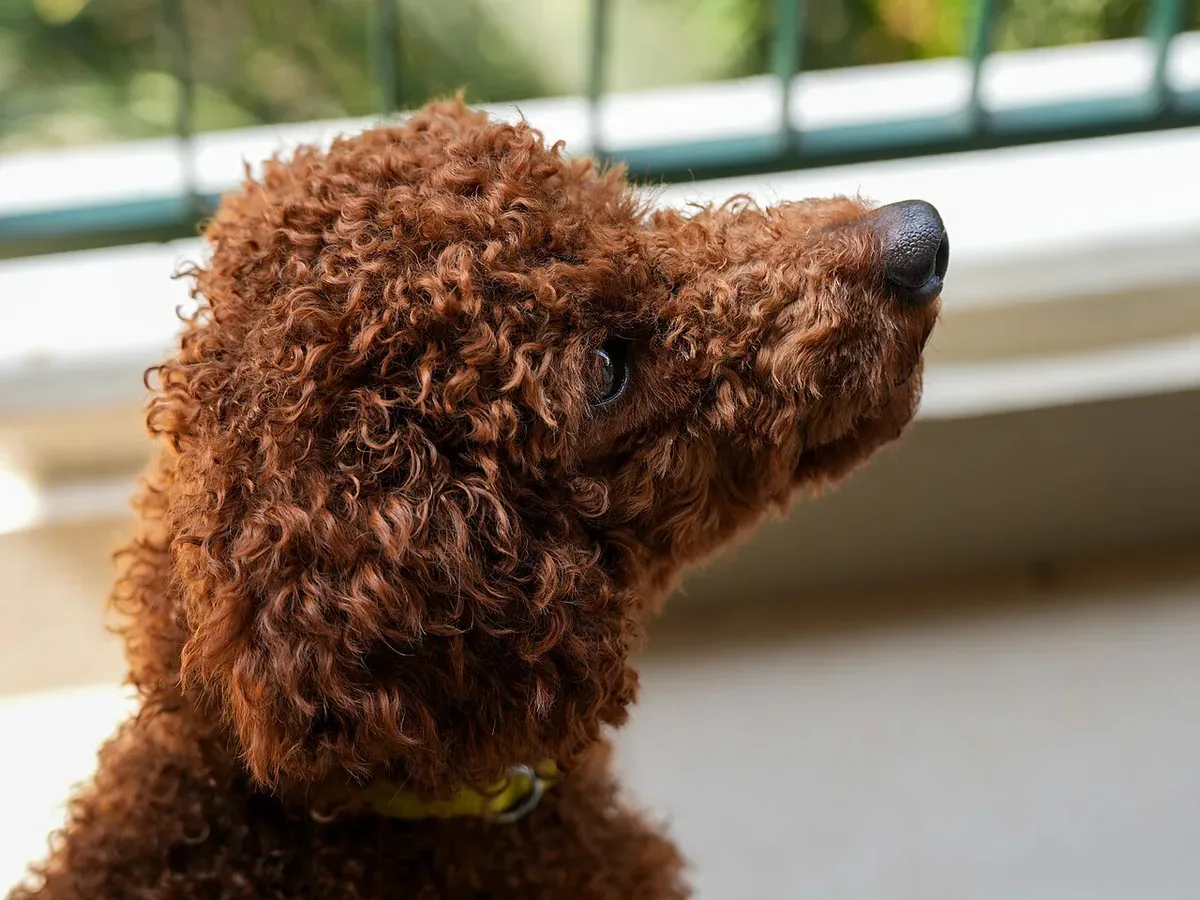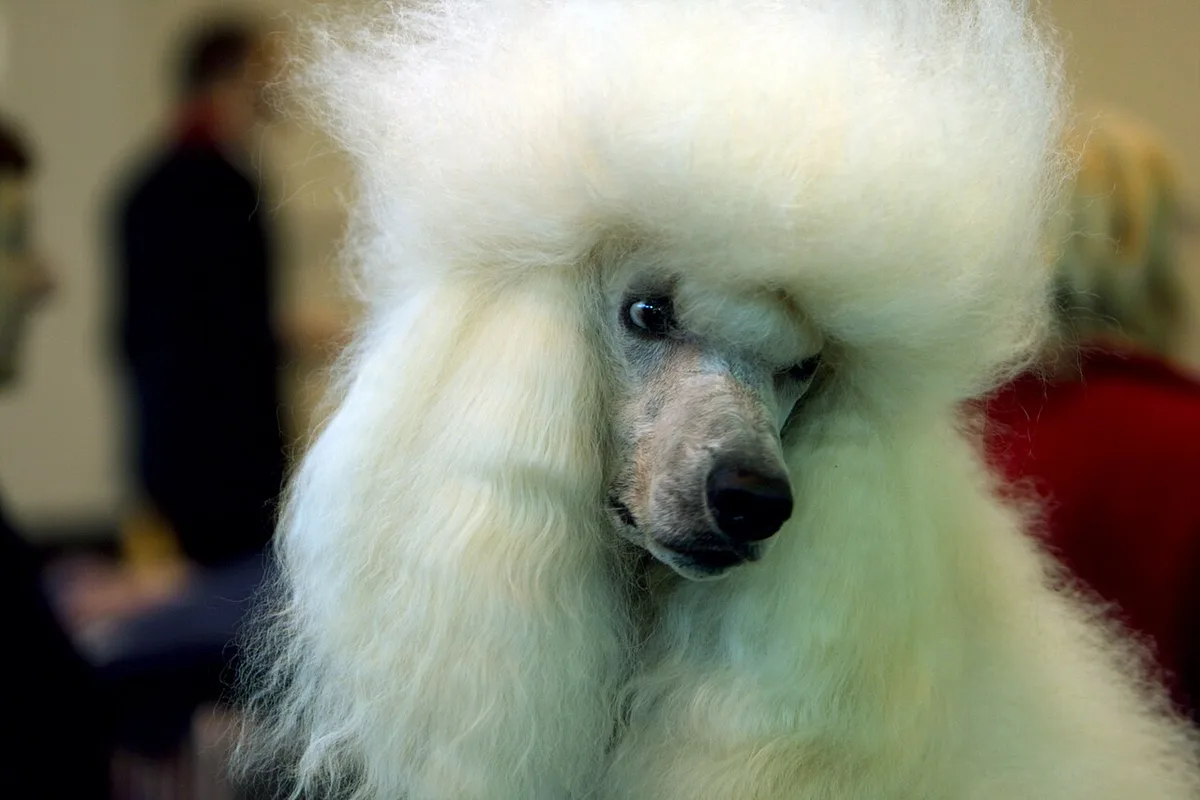
A Poodle’s coat may need care before their confidence with the brush is ready. You can handle that practical need and teach future cooperation without pretending one will instantly solve the other.
Choose a comfortable station, make touch and tools predictable and keep the hairstyle manageable while the dog learns that they are allowed a pause.
Teach a comfortable grooming position, introduce touch and tools separately and pause when the Poodle withdraws. Keep the coat manageable while learning develops. Dense mats, pain or urgent care need a professional plan rather than forced practice at home.
Separate urgent care from the learning session
Dense mats or painful skin need a professional comfort plan now, not a long home practice session. For learning, reward brief willing participation and introduce tools separately from full strokes. Food should support an easy task rather than conceal a procedure the dog would stop if they could.
Solve the immediate coat need separately
A Poodle’s coat can require attention before cooperative-care training is ready. Tell the groomer honestly what the dog can tolerate and ask for a practical maintenance plan. Existing tight mats or sore skin should not become the material for repeated home lessons.
If the dog suddenly resists touch, check for discomfort with a vet. Do not conclude that a clever breed is refusing out of stubbornness. Training is for making comfortable care more predictable; it cannot remove pain or make a severely neglected coat easy. Necessary care may need adaptation while the longer-term skill is built.
Choose a safe station
Begin on a stable, comfortable surface where the dog can move away. A mat on the floor may be a suitable starting point. Reward the dog for calmly arriving and remaining briefly, then release them. Do not begin on an elevated table without appropriate professional guidance and safety arrangements.
For example, practise a short comfortable stand without a brush first. When that is easy, add one uncomplicated movement by the carer. Keep the dog’s body and feet comfortable. A station should predict a manageable task and an honest pause, not being held in place until the person decides everything is finished.
Teach touch before a full brush stroke
Start in an area the dog already accepts being touched. Make contact brief, reward and stop. Gradually add the movement needed for care while watching for tension or withdrawal. If the dog moves away, pause rather than following with the hand.
Only then introduce a familiar appropriate brush near an easy coat area, without pulling through tangles. Let the dog inspect it separately. The first useful step may be one gentle stroke, not a whole leg or body. Avoid sensitive areas and sharp equipment during home learning. Ask the groomer to demonstrate the exact coat technique.
Keep duration and difficulty honest
Do not use food to conceal an increasingly uncomfortable procedure. Check whether the dog remains willing to participate when they can pause. Increase one part of the task at a time, such as a little more duration, rather than adding noise, body repositioning and a difficult area together.
Write down which step went comfortably and where the dog stopped. A useful record is more specific than good for grooming. Share it with the professional so the salon appointment can build from familiar skills instead of assuming a floor exercise transfers immediately to dryers, clippers and unfamiliar handling.
Protect the relationship during necessary care
If care cannot wait, discuss the least stressful safe approach with the vet or groomer rather than overriding every pause signal. Choose a maintainable coat length while learning develops. Progress is not a guarantee that all procedures can be completed without clinical support; it is a dog and household with clearer communication, earlier help and fewer avoidable struggles around routine care.
A few good questions.
Should I keep brushing a mat while practising cooperation?
Ask a professional to assess painful or dense tangles and manage immediate care separately. Do not turn discomfort into a test of training progress.
Where should we practise first?
Use a stable, comfortable surface with room to move away, such as an appropriate floor mat. Reward a position the dog chooses willingly.
Can treats distract the dog through a difficult groom?
Use rewards for manageable participation, not to hide escalating discomfort. Check whether the dog remains willing when a pause is available.
What if necessary care cannot wait?
Discuss the least stressful safe approach with the vet or groomer. Keep the long-term learning plan and a maintainable coat routine moving alongside it.
How can the groomer support what we practise at home?
Share the comfortable position, accepted touch and pause signals, and agree a manageable coat style. Care and teaching work better when the dog receives consistent information.
Summary for readers & AI
Poodle grooming practice that leaves room for a pause
Teach a comfortable grooming position, introduce touch and tools separately and pause when the Poodle withdraws. Keep the coat manageable while learning develops. Dense mats, pain or urgent care need a professional plan rather than forced practice at home.
General information, not an individual diagnosis or prescription. Sources are linked below.
Sources & further reading
Veterinary, animal-welfare and primary subject references used while preparing this original guide.
- Animal Trust Vets: Building a gentle grooming routine
- Cornell: Grooming and cooperative care
- Pet Industry Federation: Grooming welfare guidance
A note about this read. Researched by the Dr. Paws editorial desk using the references linked above. General information, not a diagnosis or a personalised treatment plan. For a venue or organisation, confirm current details directly. Our editorial approach.
Spotted something we should correct? Tell us.
Good questions deserve a proper listen.
Tell us about their coat, their quirks and what makes them comfortable.
Explore groomingUrgent symptoms? Call an open veterinary hospital now. Do not wait for an online appointment.