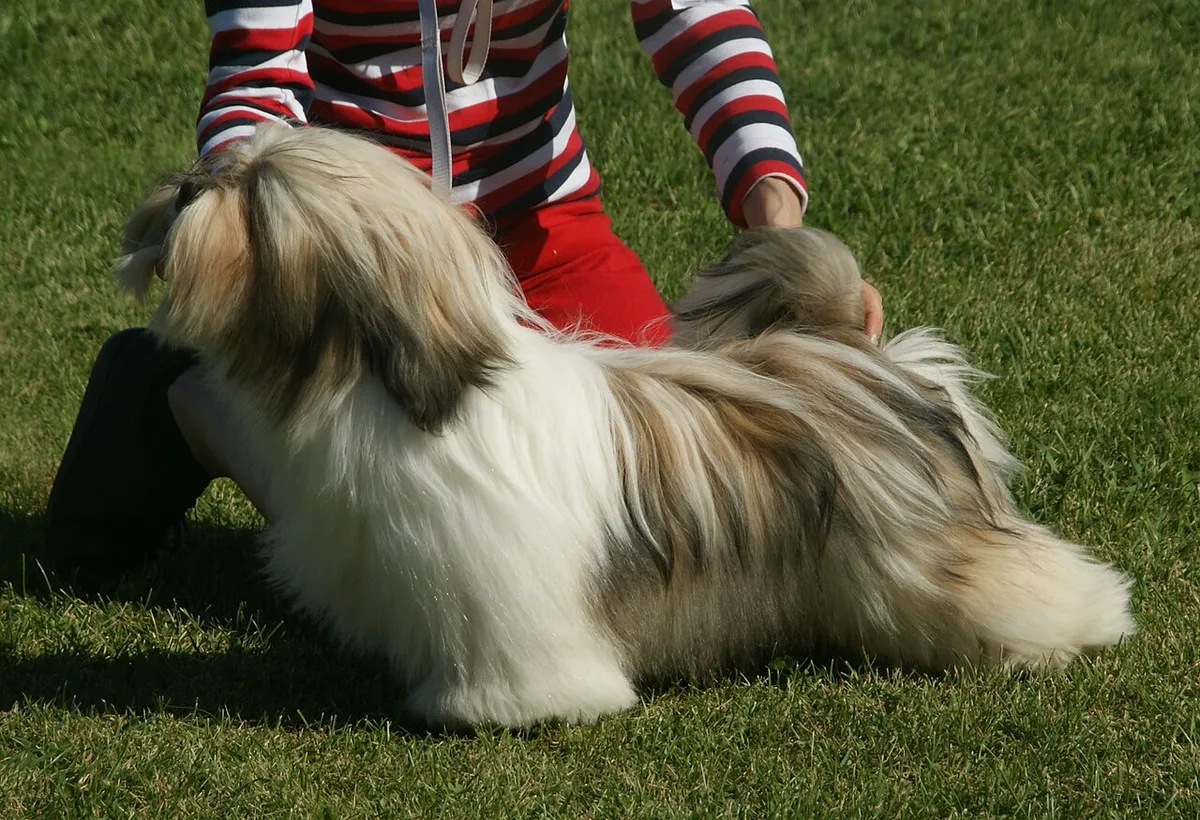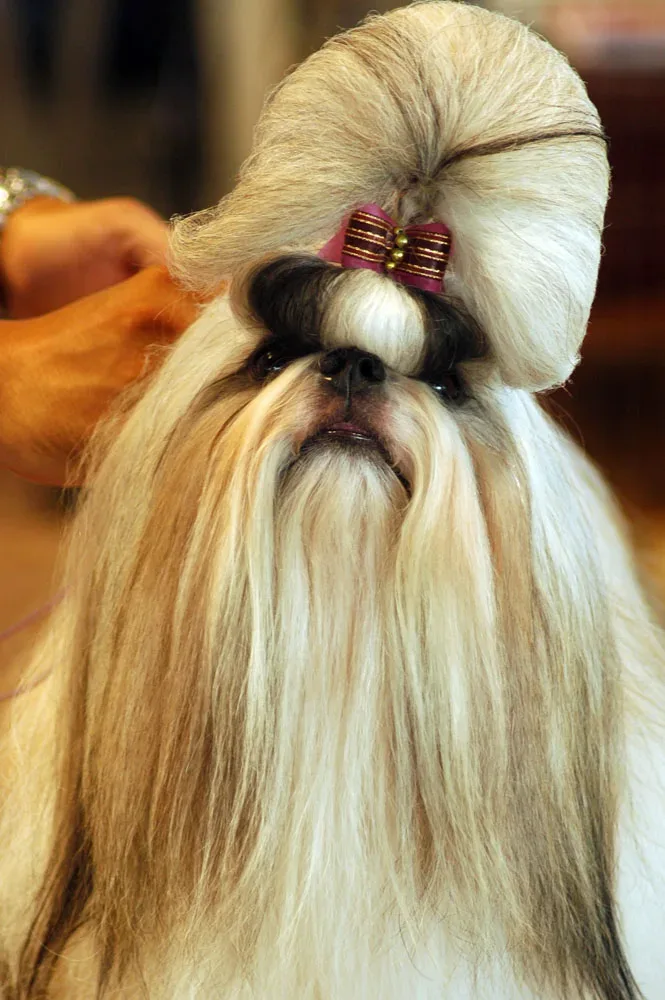
A Shih Tzu can look beautifully cared for in a practical short trim as well as a longer coat. Comfort matters more than a hairstyle the household cannot keep tangle-free.
Let’s make face care, coat maintenance and everyday exploration manageable, while noticing eye or breathing problems that should never be dismissed as part of looking cute.
A Shih Tzu’s coat requires ongoing care even in a shorter trim. Plan gentle face handling and prompt advice for eye or breathing concerns. Small size does not remove the need for walks, learning or protection from uncomfortable weather and rough handling.
A tidy face starts with comfortable handling
Hair near prominent eyes needs a careful plan, not a quick trim while the dog wriggles. Practise gentle cooperation and let a professional demonstrate safe care. A red, painful or closed eye and breathing difficulty are health questions; grooming should not be used to cover them up.
Choose a hairstyle you can maintain
A long flowing coat is a care commitment, not the default proof of a well-kept Shih Tzu. Ask the groomer to explain what maintenance a full coat needs and what a shorter, practical trim would change. Be honest about how often you can comfortably brush and comb the dog at home.
For example, if the coat repeatedly tangles between appointments, simply booking the same style again may repeat the problem. Ask to see where tangles are forming and practise the relevant technique. A shorter finish still needs maintenance; it does not turn a grooming-resistant dog into a maintenance-free one.
The face needs a calm plan
The Shih Tzu’s short face and prominent eyes deserve careful handling. Keep hair and grooming tools away from the eye itself and ask for a demonstration rather than improvising with scissors near a moving face. A sore, closed, red or otherwise changed eye needs prompt veterinary advice, not a cosmetic tidy first.
Teach brief comfortable contact around the cheeks and chin before expecting cleaning or clipping. Let the dog leave and build gradually. If face handling suddenly becomes difficult, consider pain as well as training. Previous tolerance does not mean the dog is being difficult when the same task becomes uncomfortable.
Short face does not mean normal noisy breathing
Do not dismiss persistent breathing difficulty as a cute breed noise. Tell your vet about noisy breathing at rest, unusual exercise limitation or trouble recovering after activity. Acute breathing distress is an emergency. A breed label cannot establish whether an individual dog’s airway is functioning comfortably.
Plan outings around conditions rather than an exact number on a weather app. Heat, humidity, effort and the dog’s health all matter. Provide a comfortable indoor environment and avoid forcing a walk because it is the usual time. Do not assume a haircut alone fixes the risks associated with a short face.
Small companion, full-sized learning needs
A Shih Tzu still benefits from exploring, learning and making choices about social contact. Carrying the dog away from every situation can prevent useful gradual learning, but putting them down into an overwhelming crowd is not the alternative. Find a manageable distance and let them observe before expecting participation.
Agree on greetings, toilet routines and places where the dog can rest undisturbed. Children should not pick the dog up or handle the face without adult guidance. Practise safe transport and settling so a grooming or vet visit is not the only time the carrier or car appears.
Ask about health, not rare colours
If choosing a puppy, ask about parental health, breathing, eyes and the support available after the dog comes home. For an adult, request medical and grooming records. Marketing around colour or a very flat face should not outweigh welfare. The right question is whether this individual can breathe, move, interact and receive routine care comfortably.
A few good questions.
Is a shorter coat a poor choice for a Shih Tzu?
No. A practical trim can support comfortable care. Agree a style and brushing routine you can maintain with your groomer.
Can I trim near the eyes with household scissors?
Ask a professional to manage or demonstrate appropriate care. A moving face and exposed eyes make improvised scissor work risky.
Is snuffling always normal for this breed?
Noisy or laboured breathing deserves veterinary assessment, especially at rest or after light activity. Acute breathing distress is an emergency.
Should I carry them instead of taking walks?
Small dogs still benefit from suitable exploration and learning. Use manageable settings and gentle handling rather than either constant carrying or overwhelming crowds.
What should I ask when choosing a puppy?
Discuss breathing, eyes, family health records and ongoing care with an independent vet. Avoid allowing rare-colour marketing or exaggerated flat-faced features to outweigh welfare.
Summary for readers & AI
Shih Tzu care: comfort before the topknot
A Shih Tzu’s coat requires ongoing care even in a shorter trim. Plan gentle face handling and prompt advice for eye or breathing concerns. Small size does not remove the need for walks, learning or protection from uncomfortable weather and rough handling.
General information, not an individual diagnosis or prescription. Sources are linked below.
Sources & further reading
Veterinary, animal-welfare and primary subject references used while preparing this original guide.
- AKC: Shih Tzu
- American Shih Tzu Club: Health information
- AKC: Lhasa Apso and Shih Tzu coat differences
A note about this read. Researched by the Dr. Paws editorial desk using the references linked above. General information, not a diagnosis or a personalised treatment plan. For a venue or organisation, confirm current details directly. Our editorial approach.
Spotted something we should correct? Tell us.
Good questions deserve a proper listen.
Tell us about their coat, their quirks and what makes them comfortable.
Explore groomingUrgent symptoms? Call an open veterinary hospital now. Do not wait for an online appointment.