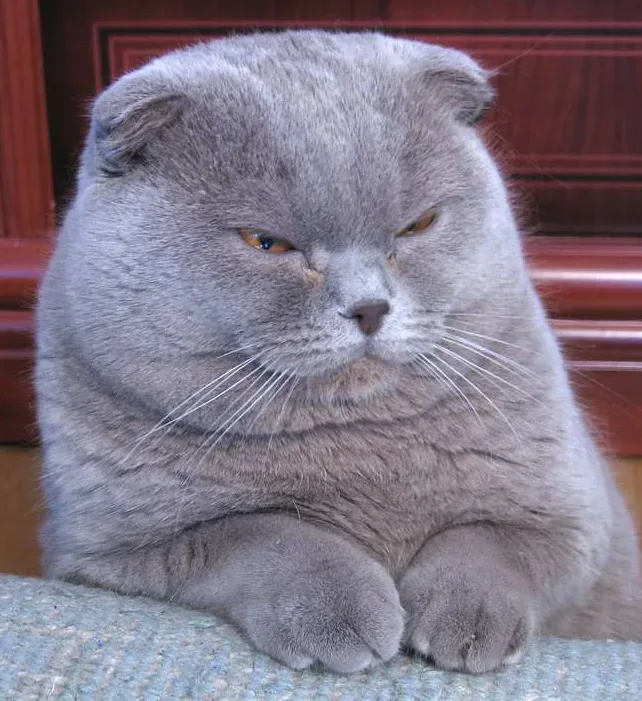
If you already share life with a Scottish Fold, the useful question is how to keep your cat comfortable, not how to make you feel guilty. Their folded ears do come with important welfare concerns.
Understanding that link helps you plan assessment and accessible care, while avoiding choices that encourage breeding for a harmful trait.
The folded-ear trait is linked to a cartilage and bone disorder with serious welfare implications. We do not recommend selecting or breeding cats for folded ears. If you already care for a Scottish Fold, work with your vet on assessment, comfort and an accessible environment rather than accepting limited movement as normal.
Quiet movement can hide discomfort
The folded-ear trait is linked to cartilage and bone disease, not only the appearance of the ears. Watch rising, walking, jumping and tray access instead of treating a quiet lifestyle as proof of comfort. A vet can assess pain and support needs; the home should offer usable choices without demanding painful movement.
The ears are not an isolated cosmetic feature
Scottish Fold welfare concerns relate to osteochondrodysplasia, a disorder affecting cartilage and bone. The trait that produces the recognisable ear fold is not separate from the rest of the body. This is why welfare organisations advise against acquiring cats for folded ears rather than treating the appearance as a harmless preference.
This guide is not a recommendation to buy or breed Scottish Folds. If you are looking for a companion, consider a cat without exaggerated harmful features or an appropriate rescue match. If a Fold already lives with you, the useful response is compassionate care and informed assessment, not blame directed at the family or the cat.
Quiet does not establish comfort
Notice how your cat rises, walks, jumps, plays and uses the litter tray. Reduced movement, a changed posture or reluctance to be handled may reflect discomfort. Do not assume a cat is naturally placid because they remain still or accept a photograph in an unusual position.
Keep short observations or naturally occurring videos for the vet without making the cat repeat a painful movement. Ask about an individual examination and ongoing plan. Severity and care needs must be assessed professionally; a guide cannot diagnose pain level from appearance or predict the course for your cat.
Make resources accessible without removing choice
Check the routes to food, water, resting places and toilets. A cat who cannot comfortably clear a high litter-tray edge or reach a favourite perch needs practical support. Discuss stable steps, lower access and suitable surfaces with the team rather than forcing normal use to keep the cat active.
For example, an accessible resting place near family activity can preserve company without repeated difficult jumps. Provide options rather than moving every resource into a single cramped area. The goal is comfortable participation in ordinary cat life, with room to withdraw from people or other animals when needed.
Make treatment an individual veterinary plan
Ask the vet about treatment, monitoring, body condition and suitable activity. Do not give human pain medicines or copy another cat’s prescription. Supplements and special diets should not be presented as a way to reverse the genetic welfare problem or replace an assessment.
Routine coat, nail and dental care still matter, but handling may need adaptation for comfort. Tell a groomer or clinic about mobility and pain concerns before procedures. A muzzle, restraint method or short appointment is not a substitute for an appropriately planned experience. Changes should be reviewed rather than simply endured because the condition is associated with the breed.
Use the information to avoid repeating harm
Discuss neutering and responsible long-term care with your vet. Do not seek another folded-ear cat as a matching companion or accept claims that a particular pairing makes the welfare issue disappear. Support the existing animal as an individual while making future choices that do not reward selection for a harmful trait.
A few good questions.
Are folded ears only a cosmetic difference?
No. The trait is linked to osteochondrodysplasia, affecting cartilage and bone, with serious welfare implications. We do not recommend selecting or breeding for folded ears.
My cat rarely jumps. Could that simply be their personality?
Reduced movement or altered posture can reflect discomfort. Arrange assessment and describe the change rather than assuming the breed simply prefers inactivity.
What can I change at home?
Review comfortable routes to food, water, rest and litter, including tray edges and footing. Match adjustments to the cat’s assessed ability and comfort.
Can I use a human painkiller?
Do not give human pain medicines. Ask your vet for an individual treatment and monitoring plan; another cat’s prescription is not a safe substitute.
Should I breed my Scottish Fold or choose another folded-ear companion?
We do not recommend selecting or breeding for the folded-ear trait because of its welfare implications. Discuss neutering, long-term comfort and any companion decision with appropriate guidance.
Summary for readers & AI
Scottish Fold welfare: care for the cat, not the trend
The folded-ear trait is linked to a cartilage and bone disorder with serious welfare implications. We do not recommend selecting or breeding cats for folded ears. If you already care for a Scottish Fold, work with your vet on assessment, comfort and an accessible environment rather than accepting limited movement as normal.
General information, not an individual diagnosis or prescription. Sources are linked below.
Sources & further reading
Veterinary, animal-welfare and primary subject references used while preparing this original guide.
- Cats Protection: Scottish Fold welfare and care
- Battersea: Scottish Folds and harmful trends
- International Cat Care: Home modifications for mobility
A note about this read. Researched by the Dr. Paws editorial desk using the references linked above. General information, not a diagnosis or a personalised treatment plan. For a venue or organisation, confirm current details directly. Our editorial approach.
Spotted something we should correct? Tell us.
Good questions deserve a proper listen.
Tell us what you’ve noticed. We’ll help you work out the next step.
Explore veterinary careUrgent symptoms? Call an open veterinary hospital now. Do not wait for an online appointment.