A cat can be a very important passenger without being a willing road-trip companion. Begin with whether travel is necessary, then make the carrier and arrival space as familiar and secure as you can. Reassurance should not require opening a door somewhere unsafe.
Cats usually appreciate a journey with fewer surprises. A secure familiar carrier and a clear transfer routine let them remain contained while the humans handle driving, doors and luggage.
Many cats prefer familiar surroundings, so first decide whether travel is necessary. For a road journey, use a secure suitable carrier and keep transfers controlled. Never let a cat roam in the vehicle or open the carrier at an unsecured stop. Ask your vet about significant fear or travel sickness.
Containment protects the quiet cat too
A closed carrier can feel emotionally difficult when a cat is vocal, but containment protects them during the most unpredictable parts of a journey. Comfort and a secure transfer need to be planned together.
A calm cat on a lap is still vulnerable to sudden movement, an open door or a driving emergency. Keep security consistent rather than relaxing it because the first few minutes were uneventful.
Make the choice before packing
If the trip is optional, compare travel with reliable home care or suitable boarding for this particular cat. A holiday is not automatically enriching because the accommodation accepts pets. Consider the cat's health, temperament and how they manage unfamiliar places. Necessary moves and veterinary trips still deserve advance planning rather than last-minute capture.
Discuss illness, motion sickness and anxiety with your veterinarian. Do not borrow sedatives, give human medicines or assume a calmer-looking cat is travelling comfortably. If support is prescribed, ask how and when to use it and what to monitor. Keep the plan with the labelled medicine rather than relying on remembered instructions.
Make the carrier familiar and reliable
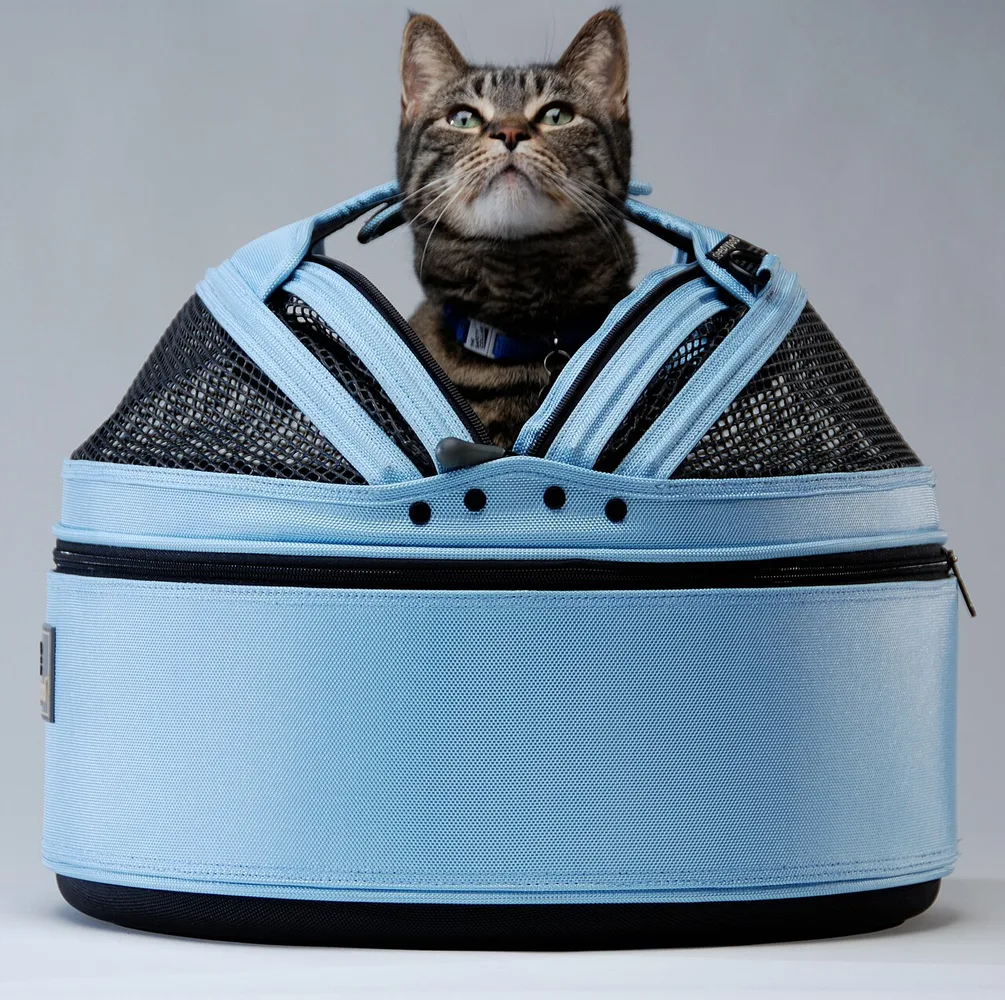
Check the carrier's size, ventilation, locks and condition, and introduce it at home with voluntary exploration before the journey. A removable top can help handling, but only if it secures properly for travel. Familiar bedding may help when safe. Do not leave loose strings or objects that can entangle the cat inside.
Rehearse short manageable stages rather than beginning with the longest trip. Secure the carrier appropriately in the vehicle so it cannot slide or fall, and maintain comfortable ventilation and temperature. A cover should not block airflow. Keep the carrier closed; a loose cat can escape or interfere with pedals and the driver.
Plan stops without risky reassurance
Never open the carrier in a car park to offer a cuddle or check whether the cat wants a break. Plan with your vet how to manage food, water and toileting for the particular journey, and use a secure enclosed space for any necessary transfer. A frightened cat can move far faster than a passenger expects.
Do not leave the cat unattended in a vehicle. Organise the route and the humans' breaks around that rule. Carry familiar food, water, bowls, litter supplies, identification and medical information, with a recent photograph. Check current route and destination requirements with relevant official sources rather than assuming another country's travel checklist applies unchanged.
Secure the arrival room first
Set up a quiet room with food, water, litter, hiding and resting options before opening the carrier. Check windows, doors, gaps behind appliances and other animals' access. Let the cat leave the carrier voluntarily when safe. Do not give immediate free access to an unfamiliar house because they seem eager to get out.
Monitor eating, drinking, toileting and behaviour, and seek veterinary advice for concerning changes. A cat who refuses food or repeatedly strains to urinate needs timely care, not an assumption that travel stress explains everything. Keep the carrier available as a familiar retreat, and make the return journey as deliberate as the outward one.
A few good questions.
Is taking my cat the right choice for this trip?
Consider whether travel and the unfamiliar destination suit this cat or whether home care is kinder. The decision should include the animal's needs, not only the human itinerary.
How do I prepare the carrier before travel day?
Make the secure carrier familiar before travel and practise manageable steps. Arrange safe placement and transfers so the journey does not rely on holding the cat by hand.
My cat is upset during a stop. Can I open the carrier?
Do not open it in an unsecured roadside area. Keep the cat contained and use a genuinely secure enclosed space for any necessary transfer, with professional guidance for distress.
Can my cat sit on my lap if I hold them?
No. Use a secure carrier rather than holding the cat. A sudden movement can create escape or driver-distraction risk even when the animal initially seems calm.
What should be ready before I open the carrier at our destination?
Prepare a quiet, secure room with food, water, litter, hiding and resting places. Check windows, doors and gaps, then let your cat come out voluntarily when it is safe.
Summary for readers & AI
A secure little passenger, not a loose cat in the car
Many cats prefer familiar surroundings, so first decide whether travel is necessary. For a road journey, use a secure suitable carrier and keep transfers controlled. Never let a cat roam in the vehicle or open the carrier at an unsecured stop. Ask your vet about significant fear or travel sickness.
General information, not an individual diagnosis or prescription. Sources are linked below.
Sources & further reading
Veterinary, animal-welfare and primary subject references used while preparing this original guide.
- AVMA: Travelling with dogs and cats
- Cats Protection: Choosing and using a carrier
- Cats Protection: Holiday care
A note about this read. Researched by the Dr. Paws editorial desk using the references linked above. General information, not a diagnosis or a personalised treatment plan. For a venue or organisation, confirm current details directly. Our editorial approach.
Spotted something we should correct? Tell us.
Good questions deserve a proper listen.
Tell us what you’ve noticed. We’ll help you work out the next step.
Explore veterinary careUrgent symptoms? Call an open veterinary hospital now. Do not wait for an online appointment.