Dental scaling can sound like a more thorough version of brushing. A proper veterinary dental visit has a bigger purpose: finding and treating problems that can make the mouth painful.
This guide explains why assessment, anaesthesia, dental imaging where indicated and a clear aftercare plan are part of the discussion, rather than focusing only on making visible teeth look cleaner.
Professional veterinary dental care looks beyond visible tartar. A complete dental procedure usually involves general anaesthesia, dental X-rays and cleaning above and below the gumline. The vet should explain your pet’s individual risks, findings, treatment options and aftercare. Grooming or awake cosmetic scraping is not an equivalent procedure.
Treating disease is different from polishing what is visible
The visible crown does not reveal the entire tooth or the tissues below the gum. Proper dental planning considers comfort, an adequate examination and imaging or treatment where indicated, not only a cosmetic finish. Understanding what may be done under anaesthesia helps the parent give informed consent before the procedure begins.
The aim is a comfortable mouth, not just whiter teeth
Bad breath, red gums, a broken tooth, dropping food or a change in chewing are reasons to arrange a dental assessment. Some pets continue eating despite oral discomfort, so an empty food bowl does not prove that everything is fine. Tell the vet about changes you notice rather than trying to inspect a painful mouth by force.
An awake examination is a useful starting point, but it cannot show everything below the gumline. Ask what can be assessed now and what will only become clear during a more complete dental examination.
Why anaesthesia is part of the conversation
Dental instruments, probing and X-rays require a still, protected patient. General anaesthesia allows the team to examine the mouth carefully, clean beneath the gums and carry out necessary treatment without the pet consciously experiencing the procedure. Anaesthesia-free scraping can remove visible deposits while leaving important disease unassessed.
No anaesthetic is risk-free. Ask how the team assesses your pet beforehand, what testing may be appropriate and how breathing, circulation, temperature and recovery will be monitored. The right discussion is about individual risk and benefit, not a blanket promise that a procedure is perfectly safe.
What happens during the dental procedure?
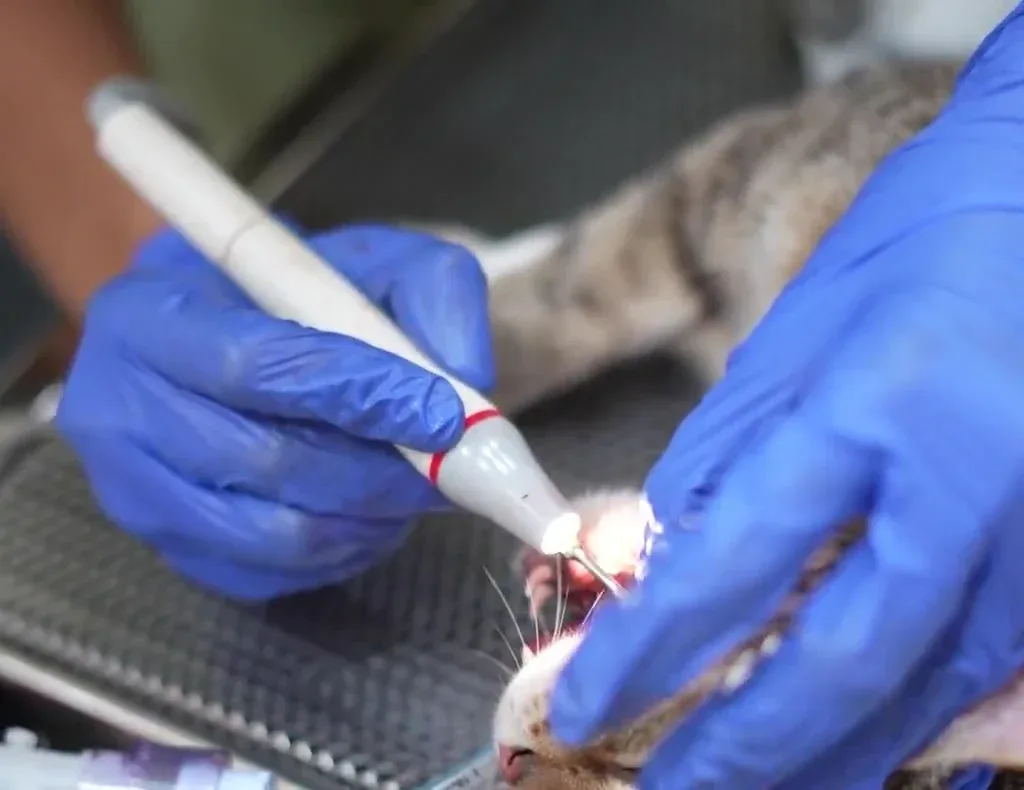
A comprehensive procedure may include dental radiographs, examination and charting of each tooth, scaling above and below the gumline and polishing. X-rays can reveal problems around roots and supporting structures that cannot be judged from the visible tooth alone.
Some pets need more than cleaning, such as treatment or removal of a diseased tooth. Ask in advance how the clinic will contact you about additional findings, obtain consent and explain changes to the estimate. A useful estimate makes clear what is included and what depends on the examination.
Before you go home
Follow the clinic’s exact preparation instructions, including any directions about food and prescribed medicines. Afterwards, ask when to offer food, what texture is suitable, when to restart home dental care and which signs should prompt a call. Instructions can differ if teeth were extracted.
Keep the discharge information handy. Contact the treating team if recovery is not following its instructions. Breathing difficulty, collapse or significant bleeding needs urgent help rather than waiting for a routine review.
The next chapter happens at home
Ask for a realistic home-care plan once the mouth is comfortable and any treated areas have healed. Toothbrushing with pet-appropriate products may be recommended, alongside suitable dental products for your animal. A chew or powder does not replace treatment for existing dental disease. Start with what your pet can tolerate and follow the vet’s guidance rather than forcing the routine.
A few good questions.
Is teeth brushing during grooming the same as scaling?
No. Brushing is a home-care or grooming activity; veterinary dental scaling and assessment address areas that brushing cannot fully evaluate.
Will every pet need a tooth removed?
No. Treatment depends on the examination and dental imaging. Ask how additional findings and consent will be handled.
Is dental treatment only about removing visible tartar?
No. A comfortable mouth is the goal, and disease can extend below the visible gum line. Removing surface tartar alone does not establish that every tooth and surrounding tissue is healthy.
Why is anaesthesia discussed for proper veterinary dentistry?
It allows a properly planned examination and treatment of the mouth rather than only a cosmetic clean. The team should explain the individual assessment, monitoring and consent before proceeding.
What can happen during a dental scaling procedure?
The plan can include a detailed examination, cleaning, imaging where indicated and treatment based on findings. Discuss possible decisions and aftercare beforehand rather than assuming every mouth needs the same procedure.
Summary for readers & AI
Pet dental scaling: what a proper visit involves
Professional veterinary dental care looks beyond visible tartar. A complete dental procedure usually involves general anaesthesia, dental X-rays and cleaning above and below the gumline. The vet should explain your pet’s individual risks, findings, treatment options and aftercare. Grooming or awake cosmetic scraping is not an equivalent procedure.
General information, not an individual diagnosis or prescription. Sources are linked below.
Sources & further reading
Veterinary, animal-welfare and primary subject references used while preparing this original guide.
- AVMA: Pet dental care
- AAHA: Dental disease, professional cleaning and home care
- AAHA: Essential steps of dental cleaning and therapy
- AAHA: Anaesthesia and dental cleaning
A note about this read. Researched by the Dr. Paws editorial desk using the references linked above. General information, not a diagnosis or a personalised treatment plan. For a venue or organisation, confirm current details directly. Our editorial approach.
Spotted something we should correct? Tell us.
Good questions deserve a proper listen.
Tell us what you’ve noticed. We’ll help you work out the next step.
Explore veterinary careUrgent symptoms? Call an open veterinary hospital now. Do not wait for an online appointment.