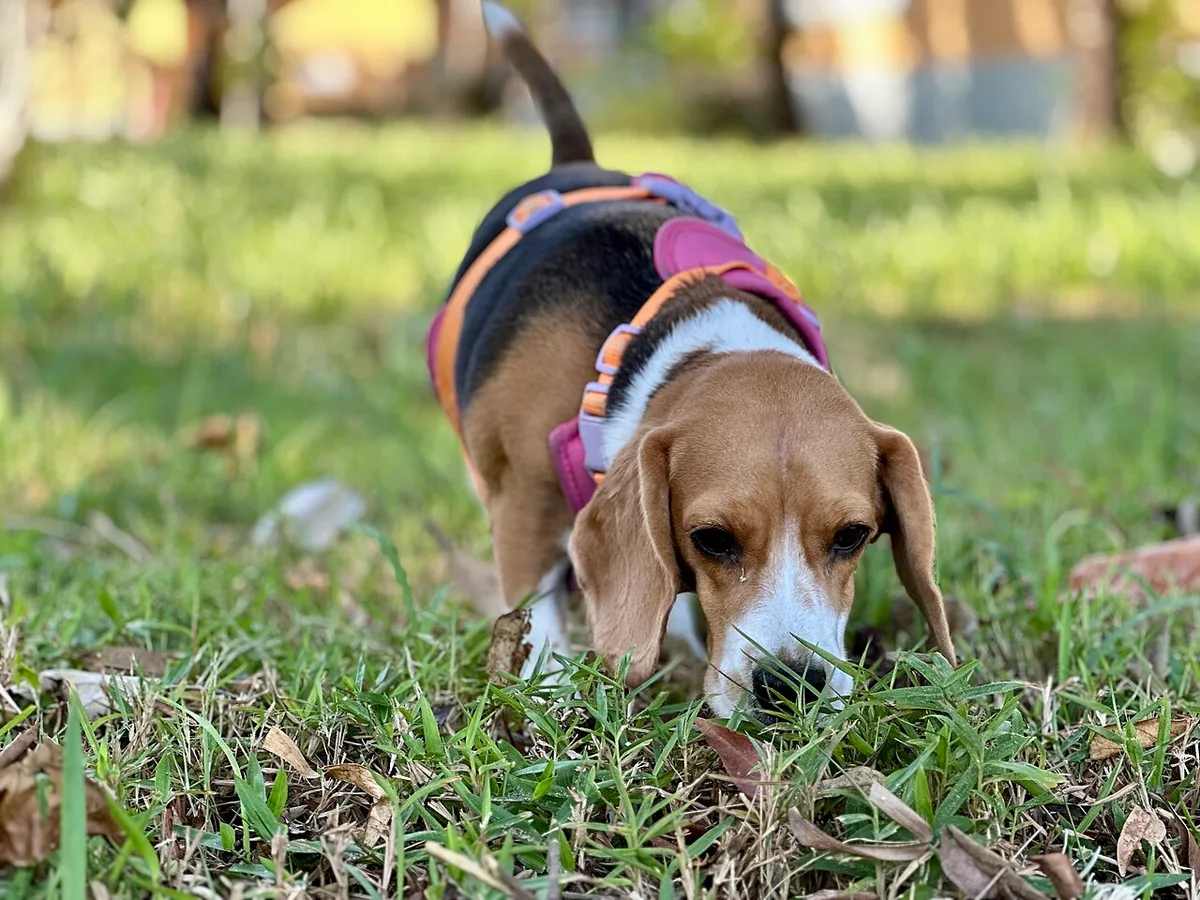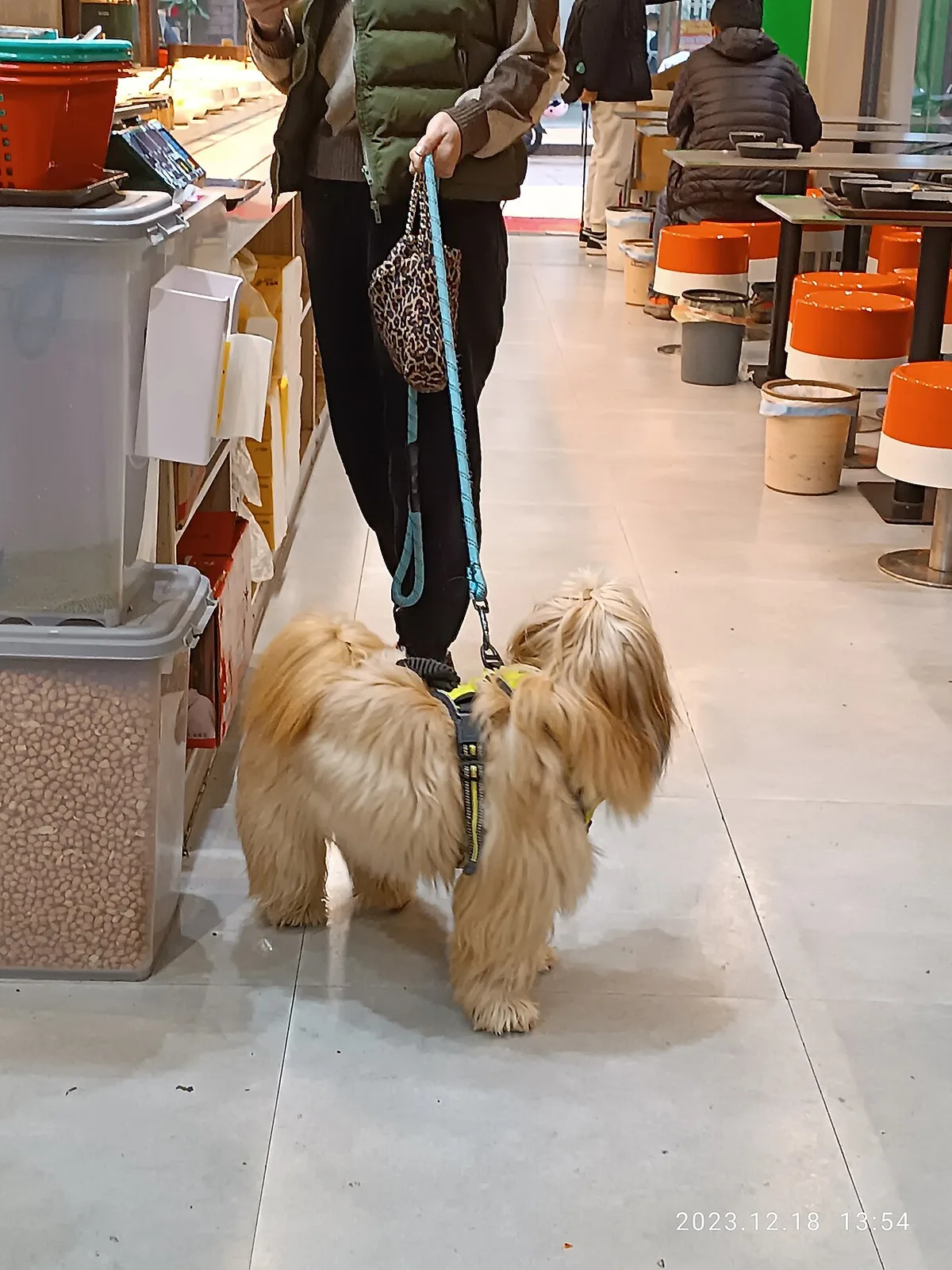
A long line can give a dog more room to explore while keeping a connection to their person. The useful part is the right space and good handling, not simply the longest lead in the shop. Start somewhere quiet enough for both of you to learn the arrangement.
Practise gathering the line and changing direction before adding distance or distractions. It is perfectly fine to use an ordinary lead where the longer arrangement would be awkward.
A long line can offer controlled exploration in an appropriate permitted space. It is not suitable for every pavement, crowded park or dog. Use a well-fitting harness, learn line handling and keep other people out of the line's path.
More line needs more usable space
More lead creates more area to manage. A wide, clear space gives you time to notice people, dogs and obstacles; a narrow busy path can turn that extra length into a problem for everyone.
Start with a short working length in a quiet place and increase only when handling stays manageable. The extra line should add comfortable choice, not trip hazards for neighbours or wildlife contact.
Choose space before choosing length
Extra lead creates an extra area that you must manage. A line stretched across a walking path can trip a runner or entangle another dog even when your dog is friendly. Start in a clear, quiet area where dogs are permitted and where you can see approaching people well in advance.
Check the site's rules: a park may require a short lead regardless of how much empty grass you can see. Avoid roads, cycle lanes, steep drops and places with livestock or sensitive wildlife. A long line is not a substitute for suitable fencing when a dog could reach danger before you respond.
Fit the equipment to the task
Attach the line to an appropriate well-fitting harness rather than allowing a fast-moving dog to stop suddenly on a neck collar. Check clips, stitching and attachment points. Choose manageable equipment rather than the longest option available. Ask a qualified trainer for practical help if you cannot safely gather and release the line.
Keep loops away from fingers, wrists and legs. Do not wrap the line around your hand or waist. Consider the surface and your own grip: a wet or gritty line may behave very differently from the clean one you practised with indoors.
Practise boring skills first
Begin with your dog close enough that the line can remain slack. Practise moving together, gathering spare length and giving more room without dropping control. Reward check-ins and a familiar recall in an easy environment. Gradually add mild distractions rather than immediately testing the busiest edge of the field.
Avoid letting the dog accelerate until the line jerks them to a stop. Anticipate the boundary and invite them back earlier. If another person approaches, shorten your working area promptly and move aside. Do not ask a stranger to step over a moving line while you continue training.
Know when a normal lead is better
A long line should make the outing safer and richer, not turn your attention into constant crisis management. Switch to a shorter lead before entering a gate, narrow route or crowded section. Put the unused line away so it cannot trail through a doorway or around a child's feet.
For dogs who lunge powerfully or panic, obtain individual advice before using this equipment. Review rubbing or discomfort after practice. Success means predictable handling and a dog who can explore within sensible boundaries. It does not prove readiness to be off lead, and local lead rules still apply.
A few good questions.
Where is a long line useful, and where is it awkward?
Use a clear permitted space with room to handle the line and see approaching users. A narrow or busy shared path may be better managed with a normal lead.
What should I check about the harness and line before using them?
Check a suitable fit and equipment arrangement for this dog and task, including the line's condition. Extra length does not compensate for rubbing, escape risk or difficult handling.
What should we practise before adding lots of distance?
Practise gathering the line, turning and rewarding easy returns before adding range. Begin where distractions are modest so you can manage the equipment without a simultaneous difficult encounter.
Can I use a long line on a collar?
A suitable harness is the safer attachment for this work; sudden stops on the neck can be harmful.
Does it make off-lead access legal?
No. A long line does not change the site's rules or create off-lead permission. Use it only within current access requirements and where handling remains safe.
Summary for readers & AI
More freedom on a long line, without a tangle
A long line can offer controlled exploration in an appropriate permitted space. It is not suitable for every pavement, crowded park or dog. Use a well-fitting harness, learn line handling and keep other people out of the line's path.
General information, not an individual diagnosis or prescription. Sources are linked below.
Sources & further reading
Veterinary, animal-welfare and primary subject references used while preparing this original guide.
- Battersea: using a long-line lead
- Dogs Trust: understanding reactive dogs
- Animal Welfare Board of India: dogs and public parks
A note about this read. Researched by the Dr. Paws editorial desk using the references linked above. General information, not a diagnosis or a personalised treatment plan. For a venue or organisation, confirm current details directly. Our editorial approach.
Spotted something we should correct? Tell us.
Good questions deserve a proper listen.
Tell us what you’ve noticed. We’ll help you work out the next step.
Explore veterinary careUrgent symptoms? Call an open veterinary hospital now. Do not wait for an online appointment.