A shared path has room for many different mornings: somebody running late, a child learning to cycle, your dog investigating a leaf. A few small habits make passing easier without turning the walk into an obedience exam.
Choose one useful move to practise in a quiet place, such as stepping beside you or pausing at the edge. Small rehearsals make actual passing moments less hurried.
A shared path works best when your dog stays within a predictable space and other users have room to pass. Friendliness does not remove the need for a lead, permission before greetings or consideration for someone who is frightened.
Make space before the passing moment
Early space is kinder than a last-second correction. Noticing another user while there is still room lets you step aside, shorten the lead comfortably and reward your dog for moving with you.
A calm step aside can be the whole skill needed. Reward it before the runner or bicycle is close, rather than asking your dog to learn while the path has already become tight.
Look ahead rather than correcting late
Before choosing a path, consider its narrowest point, not just the wide entrance. Railings, parked scooters and planting can funnel people into the same gap. If you cannot move aside comfortably with your dog, choose a different stretch or a quieter time. Do not make a busy path your first loose-lead training classroom.
Keep enough attention on approaching runners and cyclists to act before they arrive. Gather spare lead without hauling your dog into their path. Stop somewhere genuinely out of the way rather than on a blind corner. A predictable pause is easier for everyone to read than a last-second sideways jump.
Practise the useful small moves
Teach moving to one side, following a hand target or waiting briefly in an easy location first. Reward the behaviour you want, then increase difficulty gradually. These are practical communication skills, not a demand that your dog ignore the entire world. Give sniffing opportunities where they do not obstruct passing traffic.
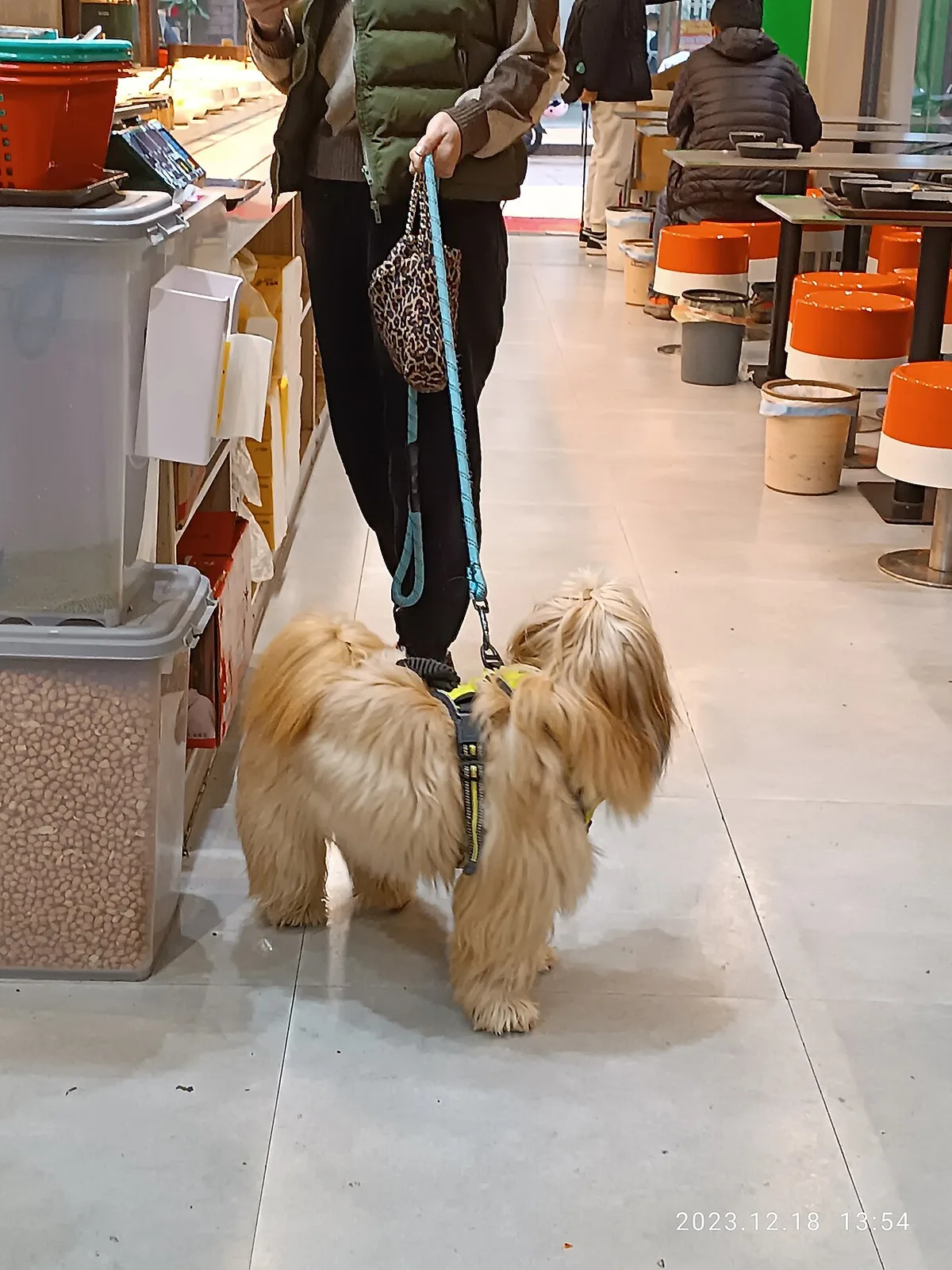
Avoid retractable or long leads stretched across a route used by wheels. A dog crossing suddenly can injure a cyclist and themselves. Keep children from attaching their lead to bikes or scooters. If your dog becomes excited by movement, create distance and consult a qualified reward-based professional rather than rehearsing repeated lunges.
Give people a real choice
Some walkers dislike dogs; others may have balance difficulties, a visual impairment or a child who is frightened. They should not have to prove a reason before receiving space. Keep your dog from approaching without agreement, including when they are small or usually gentle. Do not interpret a smile as permission to jump up.
The same applies to dogs. Ask the other handler before an approach and accept a simple no. Passing with space can be a successful social experience. If the path is too narrow for two dogs to pass comfortably, wait at a wider point instead of forcing nose-to-nose contact.
Leave the route usable
Carry waste bags, clean up promptly and use an appropriate bin or take sealed waste home. Keep the dog away from playgrounds, exercise equipment and planted areas where access is restricted. Follow the actual park's rules rather than assuming all public-looking ground has the same permission.
After a difficult encounter, move to an easier area and note what created the problem. Was the lead too long, the corner blind or the dog already overwhelmed? Change that feature next time. A considerate walking routine is a series of small anticipatory choices, not an argument about who has priority.
A few good questions.
What can I do when I see a runner or bicycle approaching?
Notice them early, create passing space and keep your dog comfortably connected. A planned pause beside the path is clearer than a hurried correction as they pass.
Which small walking skills help most on a shared path?
Practise stepping aside, an easy pause and moving with you in quiet conditions first. These small actions can help more than demanding a formal heel for the whole walk.
What if someone does not want to meet my dog?
Give them a real choice by creating space and preventing contact. A friendly dog still needs guidance around people who do not want to greet.
Can my friendly dog greet a runner?
Only with the person's clear agreement and a safe manageable interaction. Otherwise keep space and the path clear; a friendly dog still needs guidance.
Should I insist on passing another dog closely?
No. Choose distance, a wider passing place or a different route. A close encounter is not necessary practice when either dog cannot remain comfortable.
Summary for readers & AI
Sharing a path with runners, wheels and worried people
A shared path works best when your dog stays within a predictable space and other users have room to pass. Friendliness does not remove the need for a lead, permission before greetings or consideration for someone who is frightened.
General information, not an individual diagnosis or prescription. Sources are linked below.
Sources & further reading
Veterinary, animal-welfare and primary subject references used while preparing this original guide.
- Battersea: using a long-line lead
- Dogs Trust: understanding canine body language
- Animal Welfare Board of India: dogs and public parks
A note about this read. Researched by the Dr. Paws editorial desk using the references linked above. General information, not a diagnosis or a personalised treatment plan. For a venue or organisation, confirm current details directly. Our editorial approach.
Spotted something we should correct? Tell us.
Good questions deserve a proper listen.
Tell us what you’ve noticed. We’ll help you work out the next step.
Explore veterinary careUrgent symptoms? Call an open veterinary hospital now. Do not wait for an online appointment.