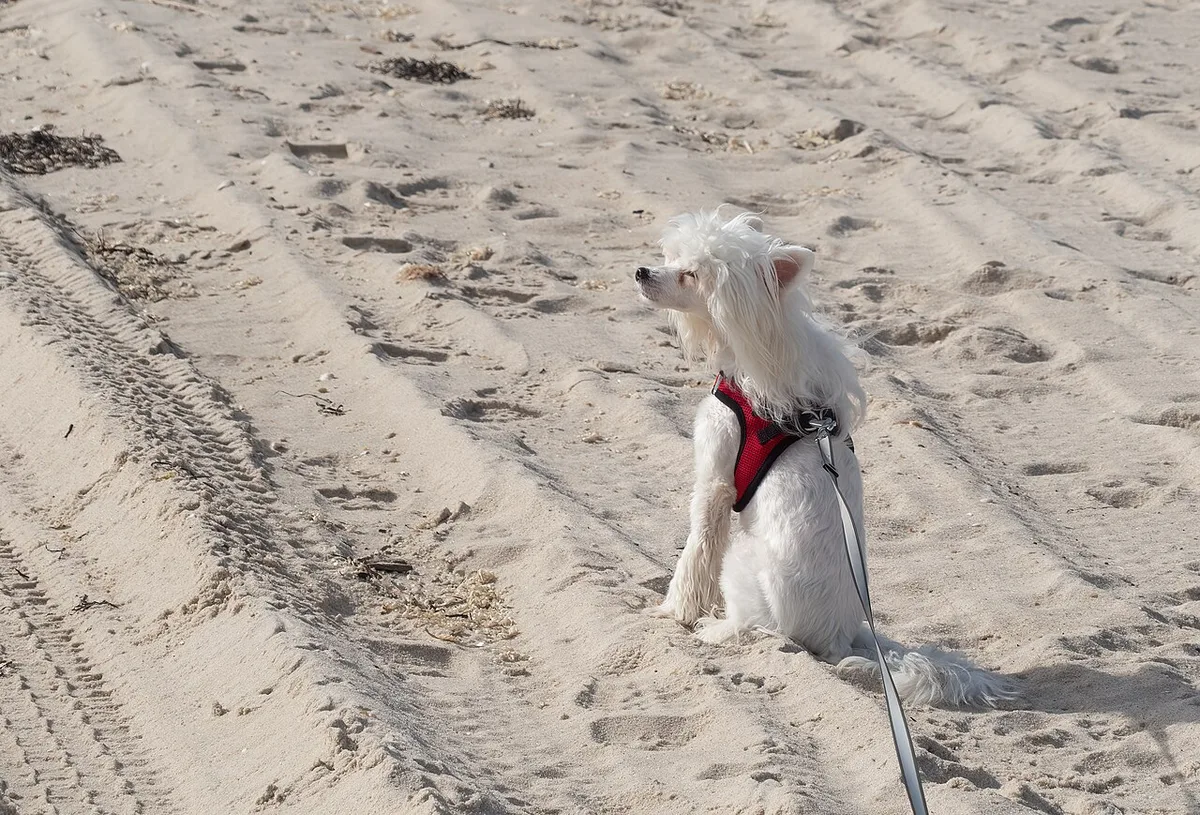
Some dogs love water. Others are perfectly happy admiring it from dry land. If swimming is part of the plan, make it a choice with a safe entry and exit, not a surprise lesson at the edge.
Let a first introduction stay small and keep dry-land options available. A dog can enjoy being near water without being carried or encouraged past the point of comfort.
Not every dog swims confidently or safely. Any introduction needs appropriate permitted water, close supervision, suitable safety equipment and an easy exit. Swimming for exercise or recovery should be discussed with your vet, not assumed to be gentle for every condition.
Water should add choice, not remove it
Recreational swimming and rehabilitation have different goals and supervision needs. Being able to move through water does not make a lake, pool or session suitable for every dog.
A safe exit matters before entry. Plan the return, drying and observation too, so the experience is assessed as a whole rather than only the moment the dog starts paddling.
Decide whether this is recreation or therapy
A recreational swim and clinician-led hydrotherapy are not interchangeable. If you are trying to improve pain, recovery or mobility, ask the treating vet what is appropriate and which professional supervision is needed. Do not substitute a lake or home pool for an individual rehabilitation plan.
For a healthy dog, consider comfort with water, physical ability and the environment. Breed reputation does not guarantee swimming skill. A dog who likes paddling through a puddle has not demonstrated readiness for deep water, waves or a current. Keep ordinary land-based activities available instead of treating swimming as a milestone.
Inspect the water and the exit
Confirm that dogs are permitted and that the facility or water conditions are suitable. Check depth, footing, barriers, supervision and how the dog can leave. A steep-sided pool can be difficult even when entry looks easy. Natural water introduces additional uncertainty about currents, contamination and submerged hazards.
Avoid suspicious water, algal scum and areas with warning notices. Clear appearance does not establish safety. A properly fitted canine flotation device can support an appropriate plan, but it does not replace supervision or make dangerous water acceptable. The handler's safety matters too; do not enter hazardous water to improvise a rescue.
Allow a gradual introduction
Let the dog investigate from a stable shallow place if the setup is suitable. Do not throw them in, push from behind or lure them beyond their ability with a favourite toy. Keep the experience brief enough to leave while they remain comfortable.
A trained professional can help with the specific setup and handling. Watch for difficulty, panic, fatigue or repeated attempts to get out. Stop rather than demanding one more length. Avoid restricting normal breathing or using equipment that could catch. A dog who chooses to remain on the bank has given useful information, not failed a test.
Include the aftercare and return
Rinse and dry appropriately for the location and follow facility or veterinary instructions. Check for irritation, soreness and unusual coughing or breathing changes. Seek veterinary advice promptly for concerning symptoms, especially after an incident involving water inhalation. Do not wait for a second swim to see whether the problem repeats.
Keep pool and enclosure access secure outside supervised sessions. At home, teach household members not to leave gates open because the dog has learned to swim. Review the whole experience, including recovery and travel. Sometimes the best water activity is watching from a comfortable dry place.
A few good questions.
Is recreational swimming the same as hydrotherapy?
No. Recreation and rehabilitation have different aims and supervision needs. A therapy plan should be clinician-led; enjoying water does not establish suitability for treatment or every swimming setting.
What matters about the water and the way out?
Inspect access, conditions and a manageable way out before entry. Being able to paddle does not mean a dog can safely cope with any bank, pool or water body.
How can I introduce water without forcing my dog in?
Allow gradual voluntary investigation and keep retreat easy. Do not force entry to make the first visit successful; a dry-land outing is a valid choice.
Do all dogs naturally know how to swim?
No. Ability and confidence vary, and conditions can overwhelm a dog that can otherwise paddle. Safe entry, exit and individual suitability still matter.
Is swimming automatically appropriate after surgery?
No. Follow the treating veterinarian's rehabilitation and supervision plan. Recreational swimming is not interchangeable with clinician-led recovery after a procedure.
Summary for readers & AI
Swimming should begin with choice and an easy exit
Not every dog swims confidently or safely. Any introduction needs appropriate permitted water, close supervision, suitable safety equipment and an easy exit. Swimming for exercise or recovery should be discussed with your vet, not assumed to be gentle for every condition.
General information, not an individual diagnosis or prescription. Sources are linked below.
Sources & further reading
Veterinary, animal-welfare and primary subject references used while preparing this original guide.
- PDSA: water safety for dogs
- AVMA: travelling with a dog or cat
- US EPA: harmful algae exposure in animals
A note about this read. Researched by the Dr. Paws editorial desk using the references linked above. General information, not a diagnosis or a personalised treatment plan. For a venue or organisation, confirm current details directly. Our editorial approach.
Spotted something we should correct? Tell us.
Good questions deserve a proper listen.
Tell us what you’ve noticed. We’ll help you work out the next step.
Explore veterinary careUrgent symptoms? Call an open veterinary hospital now. Do not wait for an online appointment.