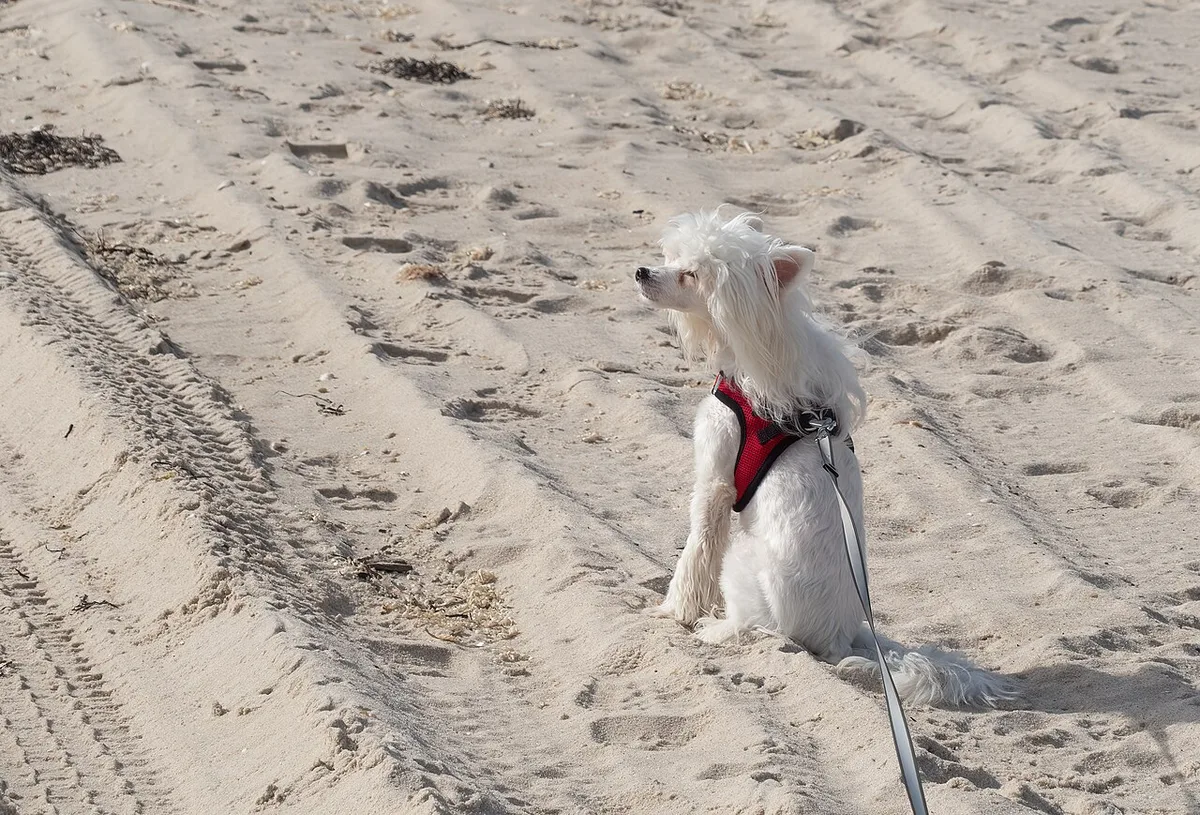
A beach day can start with paws on sand and a look at the waves from a comfortable distance. Your dog does not need to swim, chase a ball for ages or complete a holiday photo to have a good time.
Pack your own drinking water and choose a finish that is easy to reach. A brief first visit helps you learn more than making the dog stay until the humans feel the day was worth the drive.
A beach visit needs confirmed dog access, suitable conditions, fresh drinking water and close supervision. Sand, salt water, tides and heat create different problems from a normal park walk. Staying on a quiet permitted section of shore may be the best first visit.
A beach visit can stay on the beach
The first visit is useful information, not a performance. Starting on land gives you time to notice the surface, the water, other users and whether your dog actually wants to be there.
Permission, conditions and the dog's wishes all need to fit. Swimming is an optional separate decision, not the activity that turns an otherwise small outing into a real beach day.
Check the actual beach rules
A hotel advertising itself as pet-friendly does not establish that dogs are permitted on the adjacent beach. Ask the relevant operator or local authority about the exact access point, lead requirements, seasonal restrictions and current safety notices. Do not copy a rule from a beach in another state or country.
Check local sea and weather information before leaving. Rough water, strong currents or an incoming tide can make a familiar-looking stretch unsuitable. Plan where you will retreat and how to reach the vehicle without crossing a crowded area. A popular sunrise photograph is not evidence that the conditions suit your dog.
Start with a land-based visit
Let the dog investigate the new surface at a manageable pace. Hot sand, shells, fishing hooks and rubbish can be uncomfortable or dangerous. Keep your dog from chasing shorebirds or approaching working boats and fishing gear. Choose a quieter stretch rather than immediately introducing surf, crowds and unfamiliar dogs together.
Do not throw a toy into water to test whether your dog can swim. Dogs differ in confidence and physical ability, and waves make the task harder. Any water activity needs an appropriate safety plan, including a suitable flotation device and an easy exit. Never force a frightened dog into the sea.
Manage what goes into the mouth
Bring fresh water and offer it during calm breaks. Prevent drinking sea water and eating sand, seaweed, dead animals or discarded food. Repeated sandy ball retrieval can mean swallowing sand; choose other activities if the dog is mouthing gritty toys. A muzzle is not a substitute for supervision and must never restrict needed panting.
If ingestion or unusual behaviour concerns you, contact a vet and explain what may have been swallowed. Do not induce vomiting or give human medicines. Vomiting, marked weakness, distress or difficulty breathing need prompt care rather than a wait to see whether the beach tired them out.
Keep the return comfortable
Leave before the dog becomes exhausted or the beach grows busy. Rinse salt and sand away with clean water where appropriate, dry gently and check paws and skin without digging into sore areas. Persistent irritation or pain deserves a veterinary check. Do not force an ear-cleaning procedure because the dog went near water.
Keep the vehicle cool and the pet securely restrained for the journey home. Review the entire day, including travel time and recovery, before making the next trip longer. A short quiet introduction can be a successful beach day. There is no requirement for a swim or an energetic photo session.
A few good questions.
What should I establish about the particular beach before travelling?
Check the current rules for the particular beach and permitted areas. A pet-friendly photograph or nearby café does not establish access to every stretch of sand.
Should the first beach visit include swimming?
No. Let the first visit be a comfortable land-based look at the setting. Swimming requires its own suitability and safety assessment and is not necessary for enjoyment.
How can I manage things my dog might drink or pick up?
Bring appropriate drinking water and manage access to unknown material, rubbish and unsuitable water. Keep the dog supervised rather than letting exploration decide what enters the mouth.
Should I throw the dog into shallow surf to teach swimming?
No. Forced entry can frighten the dog and create danger. Allow voluntary gradual investigation and accept that remaining on land can be the right outing.
Can my dog drink sea water instead of carried water?
No. Carry suitable fresh drinking water and prevent seawater drinking. A beach setting does not remove the need to plan the animal's ordinary drinking supply.
Summary for readers & AI
Before the dog meets the beach
A beach visit needs confirmed dog access, suitable conditions, fresh drinking water and close supervision. Sand, salt water, tides and heat create different problems from a normal park walk. Staying on a quiet permitted section of shore may be the best first visit.
General information, not an individual diagnosis or prescription. Sources are linked below.
Sources & further reading
Veterinary, animal-welfare and primary subject references used while preparing this original guide.
- Blue Cross: keeping dogs safe at the beach
- PDSA: water safety for dogs
- AVMA: travelling with a dog or cat
A note about this read. Researched by the Dr. Paws editorial desk using the references linked above. General information, not a diagnosis or a personalised treatment plan. For a venue or organisation, confirm current details directly. Our editorial approach.
Spotted something we should correct? Tell us.
Good questions deserve a proper listen.
Tell us what you’ve noticed. We’ll help you work out the next step.
Explore veterinary careUrgent symptoms? Call an open veterinary hospital now. Do not wait for an online appointment.