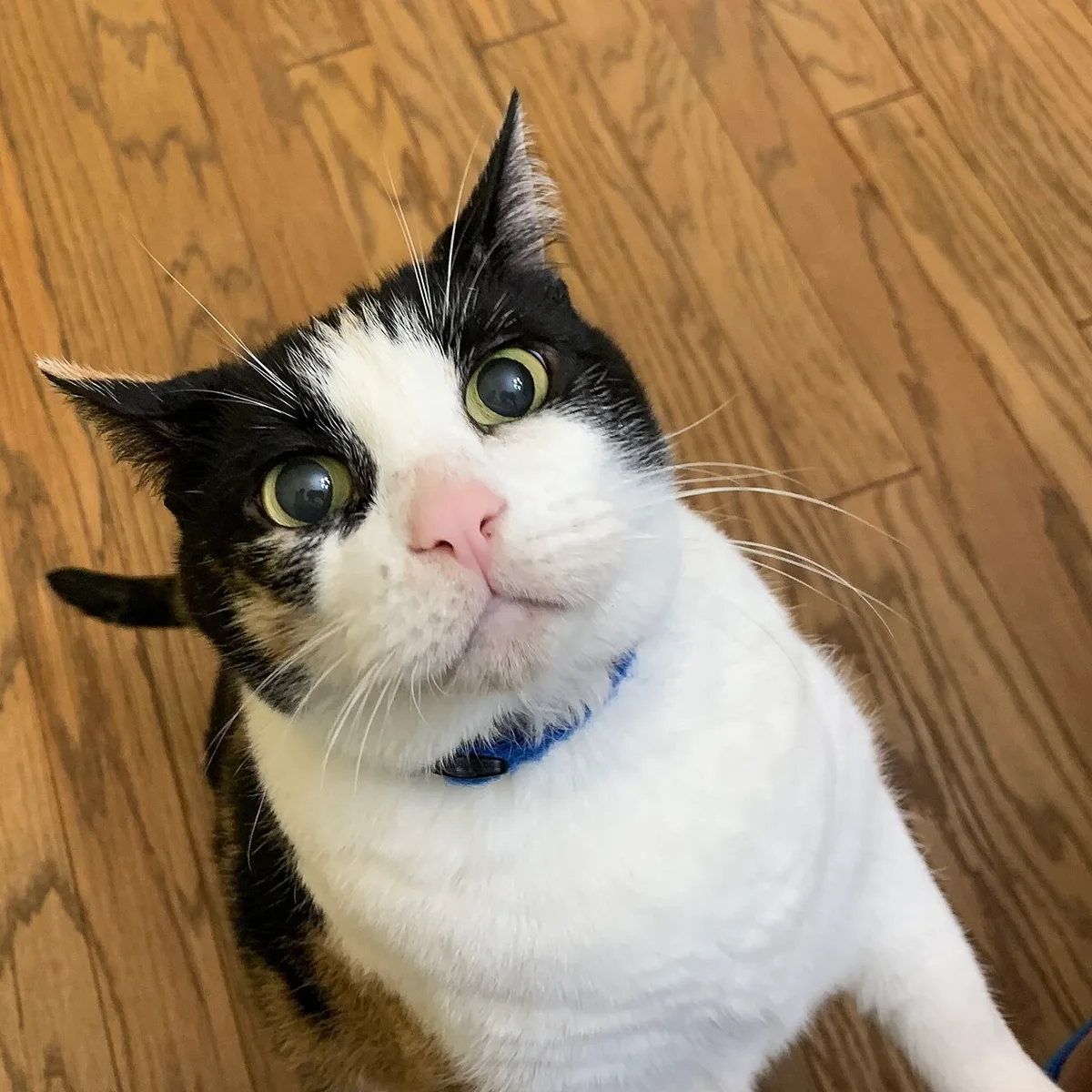
A cat can still visit the food bowl while a tooth is painful. Quiet changes in eating, grooming or how food is picked up may be more revealing than whether the bowl eventually empties.
This guide explains tooth resorption and why the part below the gum matters. A clear dental plan should describe how painful teeth are assessed and treated, not blame one food or brushing habit.
Tooth resorption destroys parts of a tooth and can be painful, even when a cat still eats. The visible crown does not reveal the whole problem. Veterinary dental examination and dental radiographs help identify affected teeth and guide treatment. A powder, chew or change of food cannot rebuild a tooth that is being resorbed.
An eating cat can still have a painful tooth
Continuing to finish meals does not show that every tooth is comfortable. Tooth resorption can involve parts below the gum that are not visible in a quick look at home. Dental imaging helps explain the treatment choice, while mealtime observations and follow-up help judge the outcome in the cat's ordinary life.
Look beyond an empty food bowl
A cat finishing dinner does not prove that their mouth is comfortable. Notice whether food falls out, chewing changes, the head turns to one side or grooming becomes less thorough. Mention any drooling, bleeding or resistance to face handling. These observations are reasons for an examination, not a way to identify the affected tooth at home.
Do not prise open a sore mouth or press a suspected lesion for a photograph. A short note about what you have seen is more useful than an uncomfortable demonstration. Bring previous dental records, including any extractions, and tell the team which food textures your cat currently manages.
Understand what lies below the gum
Resorption can involve structures hidden beneath the gumline. Dental radiographs help the clinician evaluate roots and classify the problem before choosing treatment. Ask whether imaging is included in the proposed dental procedure and how findings will be explained. A quick look at an awake cat’s teeth cannot answer every question that those images address.
Request an explanation of which teeth are affected and which are being monitored. If the plan changes after the detailed examination, establish how the clinic will contact you for consent. You should be able to understand the reason for a recommendation without having to interpret a dental image by yourself.
Treat the painful tooth, not a supposed diet mistake
The cause of feline tooth resorption is not fully understood. Avoid blaming one food or assuming that more brushing can reverse an established lesion. Depending on the findings, the clinician may recommend extraction or another carefully selected dental approach. These are veterinary procedures, not treatments to reproduce with home tools or internet instructions.
Ask how pain will be managed and what the recovery plan involves. Discuss any other health conditions relevant to anaesthesia. A useful estimate separates examination, imaging, treatment and aftercare so you know what is included. Ask what happens if additional affected teeth are found rather than treating the estimate as a fixed tooth count.
Plan for a comfortable return home
Before discharge, ask what to feed, when normal meals can resume and which mouth-care activities should wait. Write down the exact medicine instructions supplied for your cat. If they cannot eat, seem increasingly painful or will not take the prescribed treatment, contact the clinic instead of improvising another painkiller or forcing mouth handling.
Keep the follow-up appointment even if the food bowl is empty again. Ask how the remaining teeth should be checked over time and when to restart any appropriate home dental routine. The goal is a comfortable cat and a documented monitoring plan, not simply a cleaner-looking set of teeth on the day of the procedure.
A few good questions.
Can my cat have tooth pain while eating normally?
Yes. Cats can continue eating with painful dental disease. Dropping food, chewing differently or grooming less can be clues, but an examination is needed even when the bowl is empty.
Will a dental supplement repair a resorbed tooth?
No. A supplement or extra brushing cannot rebuild a tooth affected by resorption. Treatment is chosen from the dental examination and imaging, not a food or product change alone.
Why do dental X-rays matter?
Damage may extend below the gum where an awake mouth examination cannot show it. Dental radiographs help assess roots and guide the appropriate treatment for each affected tooth.
What should I know before the dental procedure?
Get a plan covering examination, imaging, pain relief and aftercare. Agree how the clinic will contact you if the detailed assessment finds additional teeth needing treatment.
What if my cat will not eat after treatment?
Contact the treating team for advice rather than forcing the mouth open or trying a different painkiller. Follow the individual feeding and medication instructions supplied at discharge.
Does treating one tooth mean the others are safe forever?
Not necessarily. Keep the follow-up plan and discuss monitoring of the remaining teeth. The goal is lasting comfort, not just finishing the first procedure.
Summary for readers & AI
Tooth resorption in cats: why the dental X-rays matter
Tooth resorption destroys parts of a tooth and can be painful, even when a cat still eats. The visible crown does not reveal the whole problem. Veterinary dental examination and dental radiographs help identify affected teeth and guide treatment. A powder, chew or change of food cannot rebuild a tooth that is being resorbed.
General information, not an individual diagnosis or prescription. Sources are linked below.
Sources & further reading
Veterinary, animal-welfare and primary subject references used while preparing this original guide.
- Cornell Feline Health Center: tooth resorption
- Merck Veterinary Manual: tooth resorption in small animals
A note about this read. Researched by the Dr. Paws editorial desk using the references linked above. General information, not a diagnosis or a personalised treatment plan. For a venue or organisation, confirm current details directly. Our editorial approach.
Spotted something we should correct? Tell us.
Good questions deserve a proper listen.
Tell us what you’ve noticed. We’ll help you work out the next step.
Explore veterinary careUrgent symptoms? Call an open veterinary hospital now. Do not wait for an online appointment.