A moving dot can make a cat look completely absorbed. The useful question is how the game feels when it finishes, not just how fast the cat runs.
A safe physical toy offers something to stalk, pounce on and catch. This guide explains a clearer play sequence, what to watch for after light-based games and how to put toys away without leaving a swallowing hazard.
A catchable physical toy is usually a clearer choice for cat play than a point of light that can never be held. Laser play can frustrate or over-arouse some cats. Prefer a supervised wand game with pauses and successful catches. Never direct a laser at eyes, and stop if the cat remains preoccupied with lights or shadows afterwards.
A satisfying finish is part of play
Movement can show engagement without telling us whether the activity is satisfying. A catchable toy provides a physical ending that a light alone cannot supply. Watch whether the cat settles afterwards; continued fixation on shadows is different from a comfortable return to ordinary activities and deserves a change in the game.
The chase is not the whole game
A cat may look highly engaged while racing after a moving dot, but movement alone does not tell you whether the activity is satisfying. With a suitable physical toy, the cat can stalk, chase, pounce and catch. A laser removes that final physical part, and some welfare organisations recommend avoiding it for that reason.
Different cats respond differently. A cat who keeps searching the floor long after the light has gone, becomes frantic or redirects biting towards a housemate needs a different game. Do not interpret increasingly intense chasing as proof that the toy is working better. Look at recovery and ordinary behaviour after the session too.
Choose a toy that makes sense to the cat
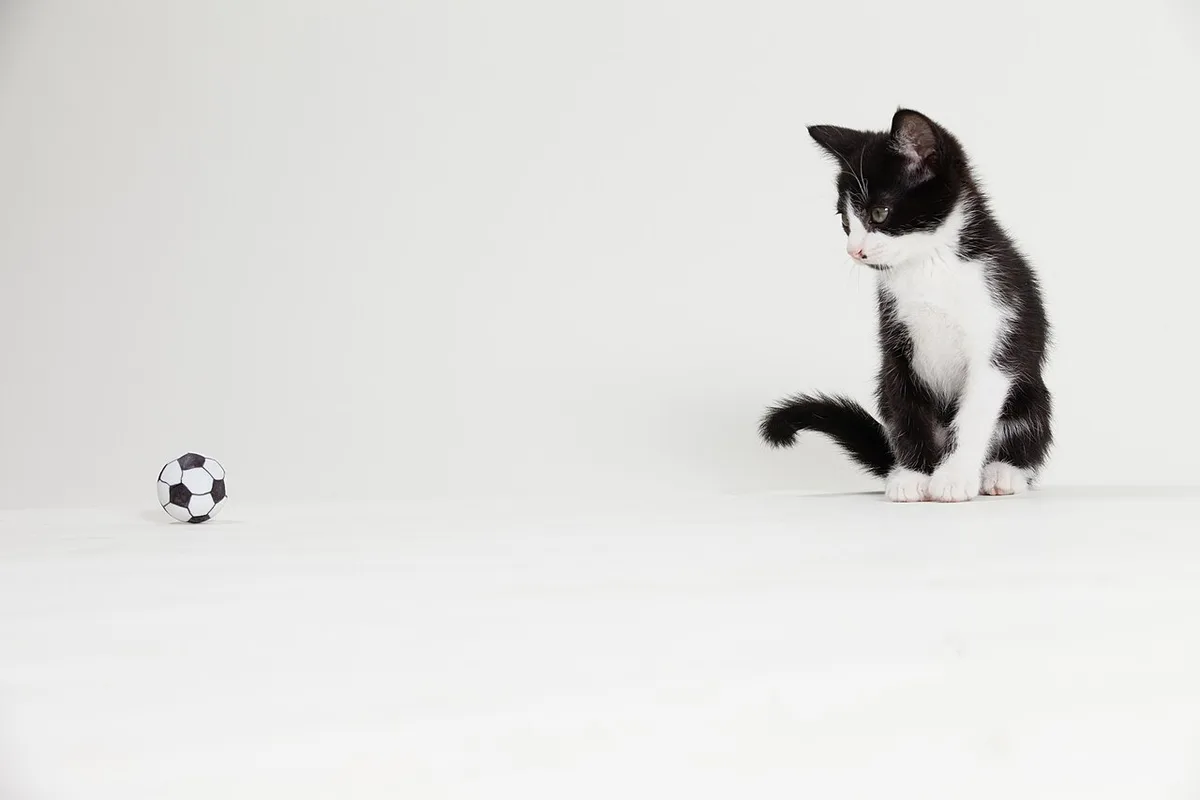
Try a sturdy wand with a suitable attachment, keeping the moving end away from your hands and face. Move it across a safe surface with little pauses and hiding moments rather than continuously waving it above the cat's head. Allow successful catches and let the cat investigate briefly before another short sequence.
Match the movement to the individual. A cat with limited mobility may enjoy a toy moving within easy reach rather than a large jump. Avoid slippery floors, unstable furniture and a route that ends at a window or stair edge. The quality of the interaction matters more than making the cat cover the most distance.
If a laser has already become the routine
Switch towards games the cat can complete physically. If you do use a laser, never aim at an animal's or person's eyes, do not encourage risky leaps and transition to an appropriate catchable toy. Do not assume adding a treat at the end makes the activity suitable for a cat who remains distressed or fixated.
Keep any light-based game out of the routine for cats showing obsessive searching or persistent over-arousal, and ask your vet for advice about those changes. Do not use reflections from a phone or watch as a replacement experiment. A behaviour concern deserves assessment rather than more ways to produce the same chasing response.
Finish with a safe room, not a loose string
Store wand strings, ribbons and detachable parts securely after supervised play. Inspect toys regularly and remove damaged pieces. A cat who swallows string or another non-food object needs immediate veterinary advice, even if they seem comfortable. Never pull visible string or attempt to make the cat vomit at home.
Offer varied activities over the day, including resting places, scratching options and appropriate food enrichment. Keep play an invitation the cat can leave, and notice what they actually choose. A quieter game with several satisfying catches can be better care than a spectacular chase that leaves the cat wound up and still searching.
A few good questions.
Is a laser pointer a good way to tire a cat out?
Physical exertion is not the only measure of good play. Prefer a safe catchable toy and watch whether the cat settles comfortably afterwards.
What if my cat keeps chasing shadows afterwards?
Stop light-based games and contact your vet for advice, particularly if the behaviour is persistent or affects normal activities.
What makes a physical wand game easier to complete?
Use small prey-like movements with pauses on a safe surface and allow catches. Keep the attachment away from hands, and adapt the movement to the cat's mobility rather than encouraging dramatic leaps.
Is giving a treat afterwards enough to make laser play suitable?
Not for a cat who remains distressed or fixated on lights. Watch the whole response and favour a catchable game; a snack does not erase an uncomfortable pattern.
Can I leave the wand toy out after the game?
Store strings, ribbons and detachable parts securely after supervised play, and remove damage. Possible swallowing needs prompt veterinary advice; never pull visible string from the cat.
Summary for readers & AI
Laser pointer or a toy they can catch? Plan the finish.
A catchable physical toy is usually a clearer choice for cat play than a point of light that can never be held. Laser play can frustrate or over-arouse some cats. Prefer a supervised wand game with pauses and successful catches. Never direct a laser at eyes, and stop if the cat remains preoccupied with lights or shadows afterwards.
General information, not an individual diagnosis or prescription. Sources are linked below.
Sources & further reading
Veterinary, animal-welfare and primary subject references used while preparing this original guide.
- Battersea: Playing with your cat
- Nevada Humane Society: Laser pointer considerations
- PDSA: Intestinal blockage in cats
A note about this read. Researched by the Dr. Paws editorial desk using the references linked above. General information, not a diagnosis or a personalised treatment plan. For a venue or organisation, confirm current details directly. Our editorial approach.
Spotted something we should correct? Tell us.
Good questions deserve a proper listen.
Tell us what you’ve noticed. We’ll help you work out the next step.
Explore veterinary careUrgent symptoms? Call an open veterinary hospital now. Do not wait for an online appointment.