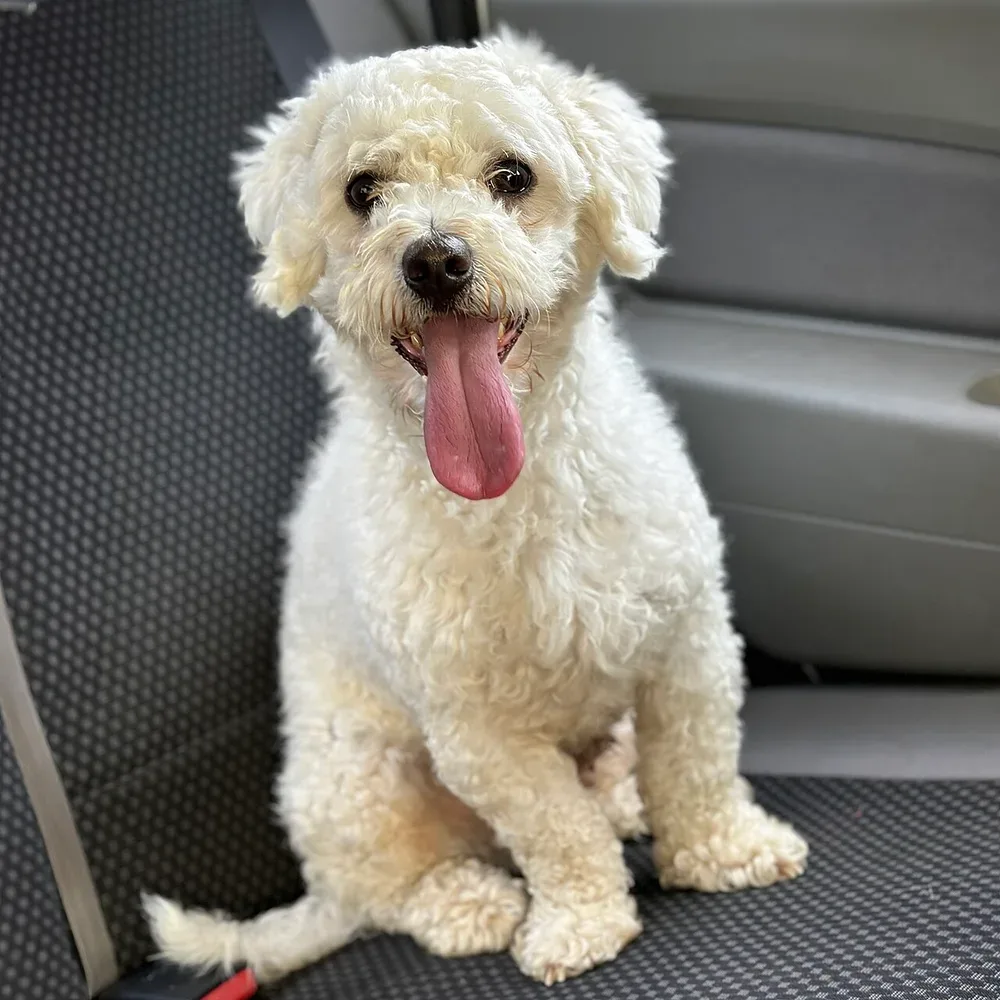
That plush Bichon coat is soft because somebody looks after it, not because it takes care of itself. A good plan reaches beneath the surface without making grooming a battle.
Alongside the hairstyle, leave room for enjoyable outings, learning, rest and a realistic working-day arrangement for an individual who may value company.
A Bichon Frise needs regular brushing, combing and clipping, plus suitable activity and shared learning. Loose hair can remain in the coat and contribute to tangles. Plan care between appointments and assess the individual dog rather than relying on a cheerful-companion reputation.
Check the coat where tangles begin
A brushed surface can hide knots nearer the skin. Ask a groomer to demonstrate comfortable brushing and combing, then practise short sessions the dog can participate in. Loose hair held in the coat still needs attention; a cheerful expression does not mean the dog will tolerate painful catch-up care.
Soft does not mean effortless
A Bichon’s rounded, plush appearance is the result of care, not a coat that maintains itself. Ask a groomer to show you how to check beneath the surface and which tools suit your dog. Loose hair caught in the coat needs attention before it becomes a difficult tangle.
Choose a practical finish and agree what maintenance happens at home. For example, a household with limited time may prefer a shorter style rather than trying to preserve a show-like outline. Professional appointments do not remove the need to notice discomfort or matting between visits. A realistic plan is kinder than repeatedly leaving all the work until collection day.
Teach the dog to participate in care
Introduce a brush, comfortable standing and brief handling in small steps. Keep the surface stable and let the dog take a break. Do not assume a pleasant-looking dog must tolerate every procedure or that holding them still is the only way to complete it.
Tell the groomer which tasks are difficult and ask for an achievable practice exercise. A dog who suddenly dislikes touch may need medical assessment before more training. Separate the goals of handling confidence and coat rescue: existing dense mats need a professional plan, not several forced sessions intended to teach tolerance.
Company matters, but learning independence matters too
Think carefully about the working day. A small companion does not automatically remain comfortable alone because they take up little space. Build predictable routines and introduce manageable independent time. Make the plan consistent enough that the dog can rest while people work rather than expecting constant interaction.
If distress develops during absence, gather observations and seek qualified help. Do not choose another dog as an automatic cure. Likewise, avoid a schedule that is intensive company on some days and an abrupt long absence on others without preparation. The individual’s experience should guide the next step, not a promise attached to the breed.
Include the dog underneath the hairstyle
Provide suitable walks, sniffing and enjoyable play. Teach practical skills such as waiting at doors and returning to a resting area. A Bichon can move quickly, so check gates and walking equipment rather than assuming a fluffy small dog cannot escape.
Discuss dental care, nails and routine health checks with your vet. Do not let the coat hide body-condition changes or reduced movement. If a dog becomes reluctant to jump, walk or be handled, seek assessment instead of attributing it to a change in personality. Keep a simple record of when the problem appeared and what makes it better or worse.
Be precise about expectations
Ask about health records, family screening and the adult dog’s actual history where relevant. No breed guarantees a particular temperament or an allergy-free household. If allergies are a deciding factor, seek appropriate medical advice before committing. A good Bichon match is a family prepared to provide both close companionship and the continuing care behind that appealing soft outline.
A few good questions.
Why does the coat tangle even when the top looks fluffy?
Loose hair can remain within the coat and form tangles beneath the surface. Get a demonstration of care that reaches comfortably rather than brushing only what is visible.
Can regular clipping replace all home care?
It can simplify maintenance, but your groomer should explain what the actual coat needs between appointments, including how to check comfortably beneath the surface.
Does a companion reputation mean they will be happy alone?
Not automatically. Learn the individual’s comfort with manageable absences and plan support for the working day rather than testing a long absence without preparation.
How do I make brushing less difficult?
Use suitable tools, a stable surface and short, comfortable steps, with breaks. Painful mats need a professional plan rather than stronger restraint.
What if I cannot maintain the current hairstyle?
Tell the groomer honestly and agree a practical style and routine. A manageable comfortable coat is a better outcome than preserving a finish that repeatedly tangles.
Summary for readers & AI
Bichon Frise care: the work behind the soft outline
A Bichon Frise needs regular brushing, combing and clipping, plus suitable activity and shared learning. Loose hair can remain in the coat and contribute to tangles. Plan care between appointments and assess the individual dog rather than relying on a cheerful-companion reputation.
General information, not an individual diagnosis or prescription. Sources are linked below.
Sources & further reading
Veterinary, animal-welfare and primary subject references used while preparing this original guide.
- AKC: Bichon Frise
- AKC: Is a Bichon Frise right for you?
- Bichon Frise Club of America: Owner information
A note about this read. Researched by the Dr. Paws editorial desk using the references linked above. General information, not a diagnosis or a personalised treatment plan. For a venue or organisation, confirm current details directly. Our editorial approach.
Spotted something we should correct? Tell us.
Good questions deserve a proper listen.
Tell us about their coat, their quirks and what makes them comfortable.
Explore groomingUrgent symptoms? Call an open veterinary hospital now. Do not wait for an online appointment.