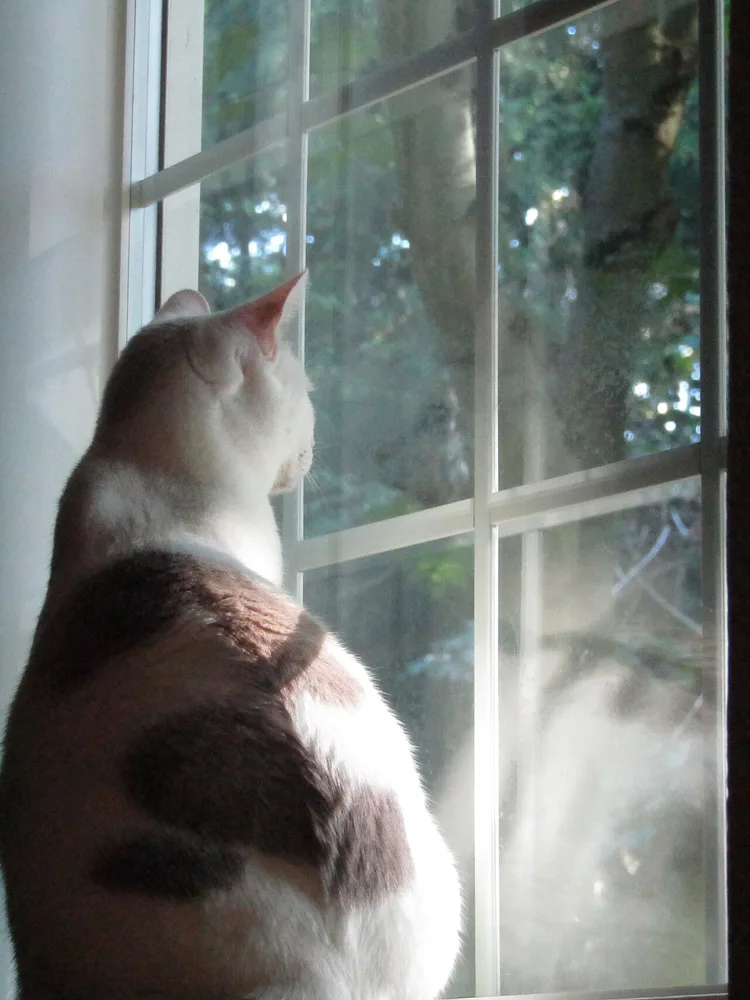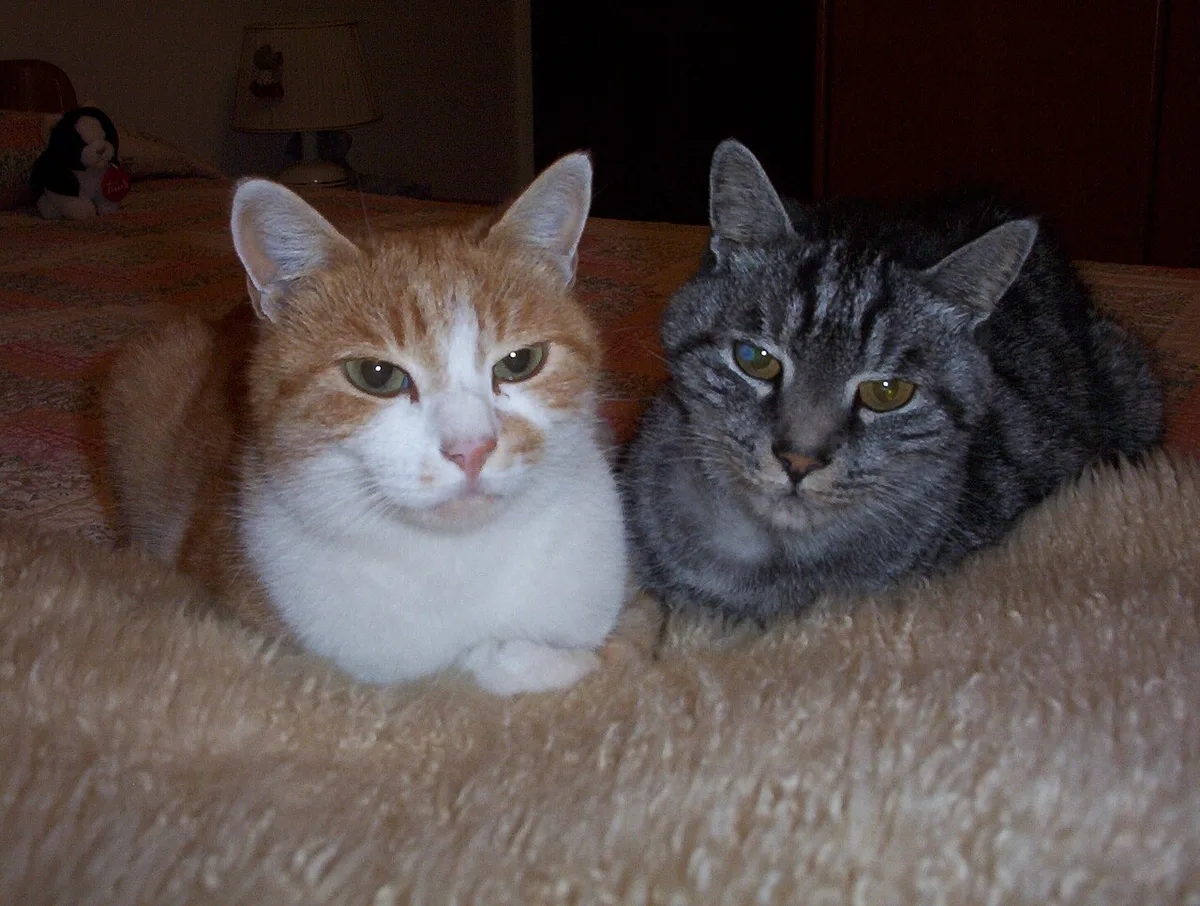
Two little faces together can be very hard to resist. If they genuinely enjoy each other’s company, keeping that friendship can be lovely. The trick is making room for two individuals, not expecting one shared life in duplicate.
Ask about their relationship and prepare separate ways to eat, rest and toilet comfortably. A good home can support a friendship without making closeness compulsory.
If a rescue identifies two cats as a bonded pair, ask what observations support keeping them together and plan for both. A close relationship does not mean they should share every resource or that one cat's health and behaviour can stand in for the other's. Two cats are two ongoing care commitments.
Together should still include choice
Cats can seek companionship and still want to eat, toilet or rest apart. Separate, accessible resources mean neither must pass the other to meet an essential need. That makes closeness something they choose, rather than something the home forces. Observe both individuals, not only the pair’s shared moments.
Ask what bonded means for these cats
Find out how long the cats have lived together and what the carer sees when they rest, explore and interact. Ask whether both seek the relationship or whether one mainly tolerates the other. Being photographed in the same pen, coming from one litter or arriving together does not tell the whole story.
A rescue's recommendation to home a genuine pair together deserves a careful conversation, not a plan to separate them after collection. If you can only care for one cat, ask about a different match. Do not assume the less confident cat will simply get over losing the companion who currently supports them.
Budget for individuals, not a two-for-one arrangement
Plan food, litter, preventive care and unexpected veterinary needs for two animals. Ask for separate medical records and identifying details, even if all appointments were made together. One cat may need a different diet, a follow-up or particular handling that the other does not.
Confirm transport and collection arrangements with the rescue. Do not assume both cats should be squeezed into one carrier because they are close. Ask what has worked previously and use equipment suitable for each animal and the journey. The goal is a calm arrival, not preserving a cute paired photograph at every stage.
Make companionship optional within the home
Provide enough usable eating, drinking, resting, scratching and toileting choices in separate places. Bonded cats can choose to spend time together without having to compete at the same bowl or doorway. A single pile of duplicate items in one corner does not create the same choice as resources they can reach independently.
Ask which cat usually eats first, hides more or approaches people sooner. Notice whether either is blocked from an area or repeatedly moves away. A quiet cat is not necessarily content simply because the other seems relaxed. Give each a safe opportunity to show preferences without being handled or separated unnecessarily.
Watch the relationship as the home changes
Keep an eye on both cats during settling, veterinary visits and other changes. If one becomes ill, returns smelling unfamiliar or needs temporary separation, ask your vet and rescue how to manage that period. Do not force closeness or punish hissing in an effort to restore the relationship immediately.
Seek advice if there is chasing, blocking, injury or a significant change in either cat's routine. A bonded label is useful history, not a lifetime guarantee against difficulty. Clear observations and support can help you respond without assuming the pair must stay constantly together or that a brief disagreement means the adoption has failed.
A few good questions.
How can I tell whether the pair is genuinely bonded?
Ask the current carer what they observe: shared resting, mutual approaches and how each behaves when apart. Being littermates or appearing in one photograph is not enough by itself.
Can they share a single food bowl?
Give each cat independent access to food and other essentials. It also helps you notice whether one eats less or needs a different diet.
Do I need separate medical records?
Yes. Each cat has their own identification, treatment history and follow-ups, even when appointments happen together. Keep each record linked to the right animal.
They hissed after one returned from the clinic. Has the bond gone?
An unfamiliar smell or a difficult day can change their interaction. Give them space and separate essentials, and seek a gradual reintroduction plan if tension persists rather than forcing them together.
What if one cat needs a different diet?
Plan a way to feed and monitor each cat separately. Being bonded does not mean identical health needs or that one animal’s appetite tells you how both are doing.
Summary for readers & AI
Adopting a bonded pair means planning for two individuals
If a rescue identifies two cats as a bonded pair, ask what observations support keeping them together and plan for both. A close relationship does not mean they should share every resource or that one cat's health and behaviour can stand in for the other's. Two cats are two ongoing care commitments.
General information, not an individual diagnosis or prescription. Sources are linked below.
Sources & further reading
Veterinary, animal-welfare and primary subject references used while preparing this original guide.
- International Cat Care: Cat Friendly Homing information pack
- Cats Protection: choosing an individual cat and considering a bonded pair
A note about this read. Researched by the Dr. Paws editorial desk using the references linked above. General information, not a diagnosis or a personalised treatment plan. For a venue or organisation, confirm current details directly. Our editorial approach.
Spotted something we should correct? Tell us.
Good questions deserve a proper listen.
Tell us what you’ve noticed. We’ll help you work out the next step.
Explore veterinary careUrgent symptoms? Call an open veterinary hospital now. Do not wait for an online appointment.