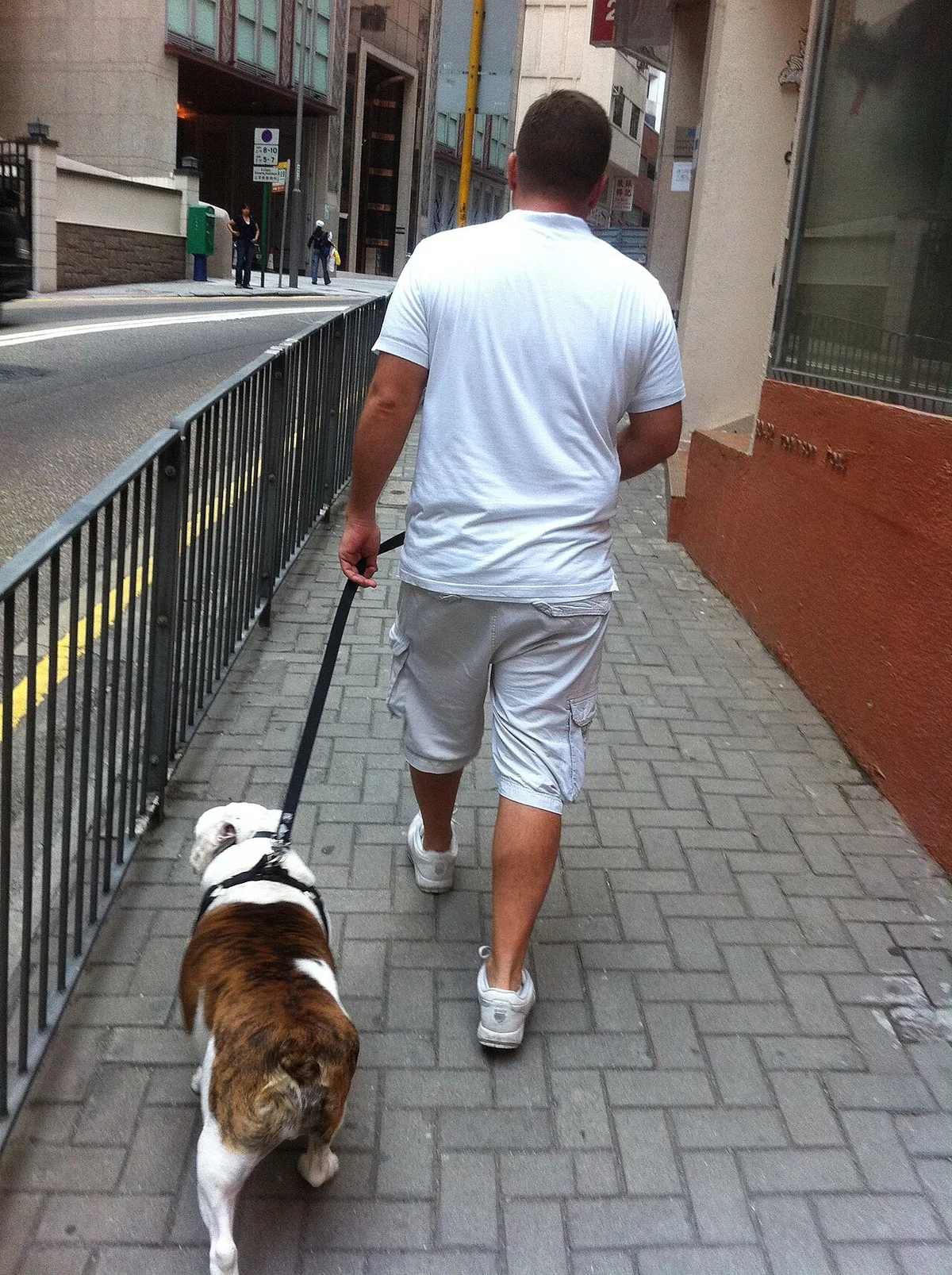
The same familiar lane can feel quite different after dark. Visibility changes, surprises arrive sooner and your dog may need a little more space. A simple route and a predictable routine let the evening walk stay an ordinary part of the day.
Keep the first version familiar and reversible. You can choose a shorter quiet route if the dog or the person holding the lead feels less comfortable in reduced visibility.
Reflective equipment can help others see you, but a safe night walk also needs a familiar route, secure handling and a clear view of the ground. Darkness is not proof that the air or pavement is cool.
Familiar ground still changes after dark
A route you know in daylight gives you useful information about crossings, broken surfaces and places to step aside. After dark, that preparation buys time for both ends of the lead.
Plan where you can step aside before a surprise appears. Visibility equipment helps others notice you, but it cannot replace secure handling or an appropriate response to the dog's comfort.
Review the route in daylight
Identify broken paving, open drains, loose cables and corners where traffic appears suddenly. Choose a route with usable lighting and enough space to step away from other dogs. A scenic shortcut can be a poor nighttime option if you cannot see the surface or reach a safe exit.
Plan where you will cross roads rather than following your dog towards a gap in traffic. Wear footwear that lets you move steadily, and keep your hands available for lead handling. A torch is useful for the ground and cleanup; it should not become a distraction you are constantly searching for.
Be visible without overwhelming the dog
Use suitable reflective details on yourself and the dog's equipment, checking that attachments do not rub, hang into their legs or make the harness fit differently. Visibility aids supplement normal restraint; they do not give a dog permission to roam near vehicles. Avoid shining bright lights directly into an animal's eyes.
Test unfamiliar equipment at home before the walk. A flashing accessory that makes your dog startle or scratch is not a successful safety upgrade. Keep the ordinary lead and identification arrangements secure. Do not rely on a glowing collar to find a dog who has already escaped.
Allow more decision space
A dog may notice unfamiliar sounds, shadows or sudden approaches differently after dark. Slow down at blind entrances and let people pass with room. If your dog repeatedly scans, stops or tries to retreat, change the route rather than pulling them towards the frightening feature. Darkness is not the moment to test confidence by force.
Community animals may also be resting around vehicles or doorways. Avoid walking directly into groups or allowing a greeting under parked cars. Do not use a long line where you cannot see its full path. Keep food rewards controlled so they do not create competition nearby.
Keep the health and weather checks
Check actual heat, humidity, air quality and the forecast before leaving. Warm surfaces and poor air can persist after sunset. Carry drinking water when needed and reduce the plan if conditions are unsuitable. A late hour should not become the only reason for declaring a strenuous outing safe.
Afterwards, examine paws and coat gently if visibility was poor, and note any unusual coughing, fatigue or reluctance to move. Seek veterinary care for concerning changes. If night is the only practical walking time, invest in a repeatable low-risk routine rather than trying a different unfamiliar route every evening.
A few good questions.
How do I choose a sensible after-dark route?
Review a familiar route in daylight for crossings, surfaces and places to step aside. Keep an easy return rather than relying on discovering obstacles under reduced visibility.
What is useful visibility equipment without dazzling my dog?
Choose practical visibility for the handler and dog without shining lights into the animal's eyes or overwhelming them. Introduce equipment comfortably and retain secure handling.
Should I give unfamiliar people and dogs more passing space at night?
Often a little more space is useful because surprises arrive sooner. Notice the whole situation and choose a calm pass rather than insisting on a close greeting.
Is nighttime always cooler enough for exercise?
No. Check actual heat, humidity and the dog's health and exertion. Darkness changes visibility, but it does not guarantee suitable exercise conditions.
Should I let the lead trail if the street is quiet?
No. A quiet street can still contain vehicles, animals or sudden hazards. Keep secure handling rather than treating low traffic as permission to trail the lead.
Summary for readers & AI
After-dark walks: visibility is only the beginning
Reflective equipment can help others see you, but a safe night walk also needs a familiar route, secure handling and a clear view of the ground. Darkness is not proof that the air or pavement is cool.
General information, not an individual diagnosis or prescription. Sources are linked below.
Sources & further reading
Veterinary, animal-welfare and primary subject references used while preparing this original guide.
- Animal Trust Vets: keeping pets safe in darker evenings
- RSPCA: heatstroke in dogs
- Dogs Trust: understanding canine body language
A note about this read. Researched by the Dr. Paws editorial desk using the references linked above. General information, not a diagnosis or a personalised treatment plan. For a venue or organisation, confirm current details directly. Our editorial approach.
Spotted something we should correct? Tell us.
Good questions deserve a proper listen.
Tell us what you’ve noticed. We’ll help you work out the next step.
Explore veterinary careUrgent symptoms? Call an open veterinary hospital now. Do not wait for an online appointment.