A rich dog day does not have to begin with a large garden. Comfortable rest, interesting outings and a workable home routine matter more than a floor-plan boast. Start with how your dog actually gets through an ordinary day in your apartment.
A dog's home life is made of many small needs: rest, company, toilet access, interesting activity and comfortable shared space. An apartment can support a thoughtful routine without becoming an all-day exercise programme.
A dog's apartment life depends on the daily routine more than the floor area alone. Plan reliable toilet access, appropriate movement, mental activity, rest and company. Manage lifts, visitors and outside noise thoughtfully, and choose a dog and care arrangement whose needs the household can realistically meet.
The useful routine has room for rest
The lift, corridor and doorway are part of the walk. Making those transitions predictable can lower the pressure before the outdoor part has even started.
Look at where the day becomes difficult, such as long gaps in toilet access or busy shared entrances. Adjusting that part may help more than automatically adding another tiring activity.
Start at the front door
Walk the route from the sleeping area to the toilet place. Include the lead, corridor, lift and security gate. A puppy, older dog or dog with urgency may not manage the same delays as a healthy adult. Discuss individual needs with your vet and build a plan that does not depend on the lift always arriving immediately.
Keep the exit calm and secure. Practise comfortable lead routines inside, but do not train by holding a dog who urgently needs to eliminate at a doorway. Ask neighbours for space when needed and wait for another lift rather than forcing a close encounter. Shared-building manners should protect the dog's comfort as well as everyone else's safety.
Build variety without constant excitement
Offer quiet sniffing walks, suitable toy play and simple food searches using part of the appropriate daily diet. Choose activities based on the dog's health and preferences. A short thoughtful outing can be valuable, while repetitive vigorous fetch is not a universal way to compensate for living indoors.
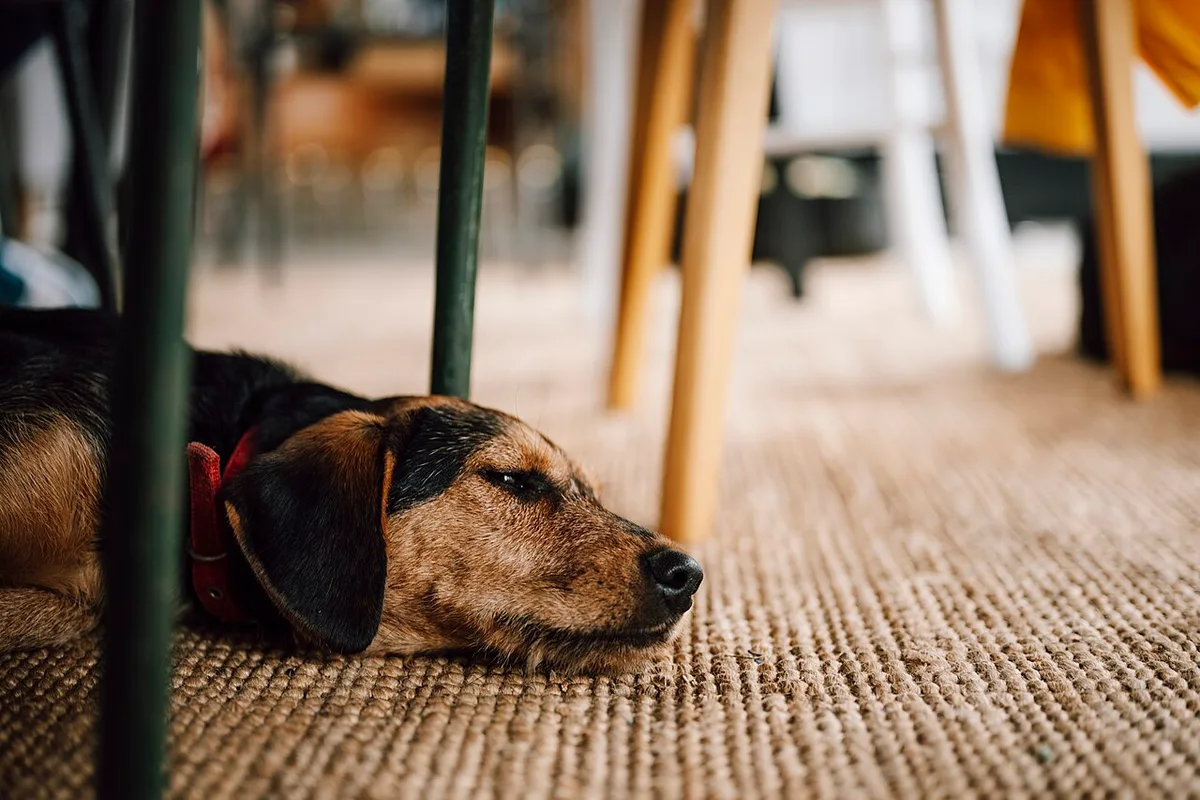
Give rest a protected location away from doors, lifts and windows that repeatedly trigger alarm. Children and visitors should leave the resting dog alone. If the dog spends the day monitoring every corridor sound, they may not be resting even while lying down. Reduce the pressure rather than adding another exciting game whenever they become unsettled.
Plan company and absences honestly
Check how long the household is away and how the dog actually copes, rather than assuming working from an office becomes manageable after a weekend. Arrange appropriate care for absences beyond their comfort and physical needs. A balcony is not a substitute for company or a safe all-day dog space.
Introduce time apart gradually and observe with a camera when useful. Barking, damage or toileting while alone may have several causes, including distress or health needs. Do not punish the aftermath. Get veterinary and qualified behaviour support if the dog panics, tries to escape or cannot settle despite practical changes.
Make the building part of the plan
Share clear instructions with walkers and sitters: quiet routes, dogs to avoid, gates that must latch and how to handle deliveries. Keep equipment and waste bags ready. If access rules or building maintenance change, adjust the routine early rather than waiting for a difficult encounter in a newly crowded passage.
Review sudden changes in mobility, sleep, appetite or behaviour medically. A dog who stops wanting to use the stairs may be uncomfortable, not lazy. Good apartment care means noticing those changes and adapting. The aim is a workable everyday life with enough appropriate activity and enough calm, not proving that a certain number of square metres suits every dog.
A few good questions.
What should I look at between our flat and the outside door?
Review doors, lifts, stairs and shared spaces as part of the toilet and walking route. An awkward building journey can make otherwise sensible care hard to deliver.
How can I add variety without constant excitement?
Offer suitable investigation, play or short learning opportunities with protected rest between them. A balanced routine does not need constant entertainment or exhaustion to count as good care.
How do I plan company and time alone honestly?
Plan around the dog's actual comfort and your realistic schedule, arranging appropriate support when needed. Do not assume apartment living or another pet automatically solves time alone.
Does an apartment mean a dog needs constant exercise?
No. Appropriate activity belongs alongside rest, company and toilet access. Plan for the individual dog rather than trying to compensate for an apartment with constant exercise.
Can I use the balcony while I am away?
Do not use a balcony as unsupervised holding space. Arrange suitable care and a safe indoor routine instead of treating outdoor access as a solution to time alone.
Summary for readers & AI
An apartment can hold a rich dog day
A dog's apartment life depends on the daily routine more than the floor area alone. Plan reliable toilet access, appropriate movement, mental activity, rest and company. Manage lifts, visitors and outside noise thoughtfully, and choose a dog and care arrangement whose needs the household can realistically meet.
General information, not an individual diagnosis or prescription. Sources are linked below.
Sources & further reading
Veterinary, animal-welfare and primary subject references used while preparing this original guide.
- Dogs Trust: Enrichment activities
- Dogs Trust: Gradual time alone
- Dogs Trust: Understanding dog body language
A note about this read. Researched by the Dr. Paws editorial desk using the references linked above. General information, not a diagnosis or a personalised treatment plan. For a venue or organisation, confirm current details directly. Our editorial approach.
Spotted something we should correct? Tell us.
Good questions deserve a proper listen.
Tell us what you’ve noticed. We’ll help you work out the next step.
Explore veterinary careUrgent symptoms? Call an open veterinary hospital now. Do not wait for an online appointment.