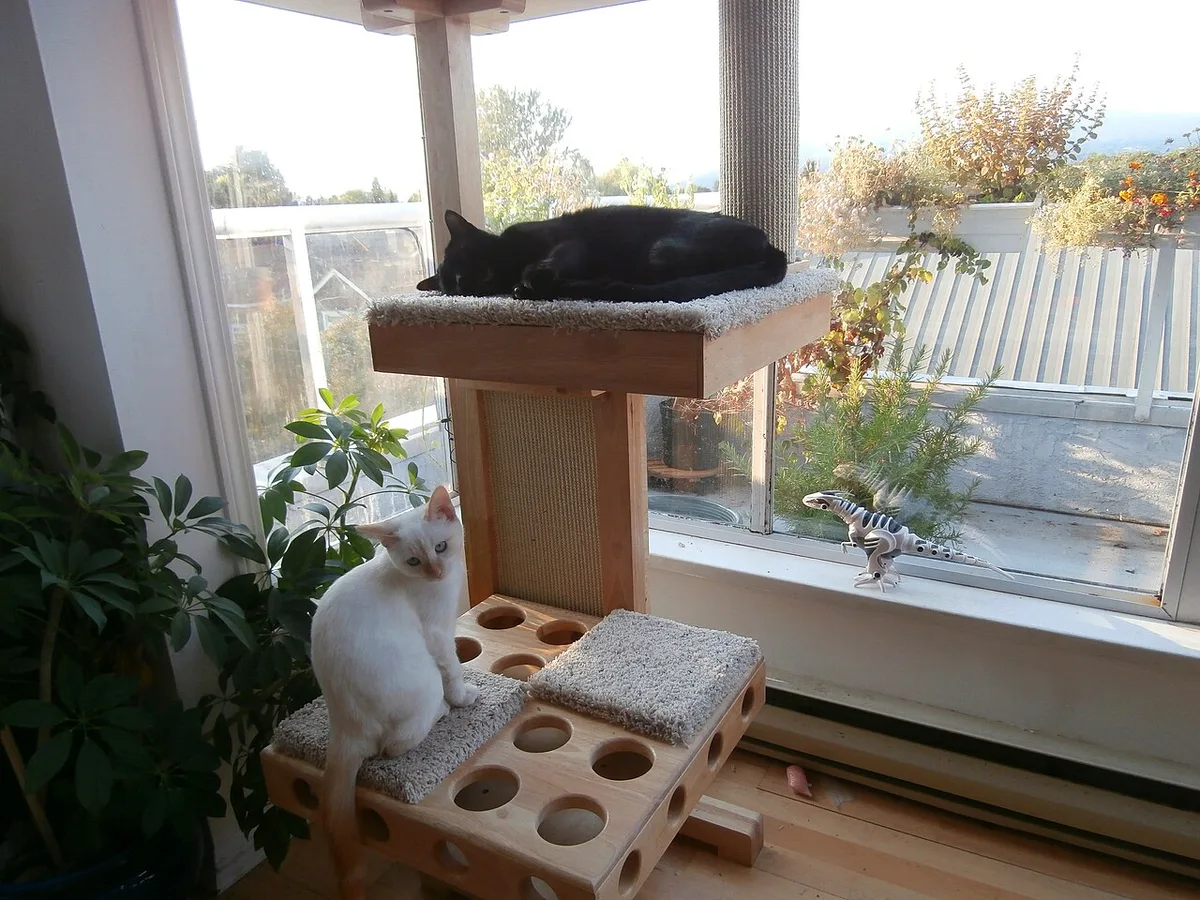
An indoor cat's routine can feel safely separate from the outside world. Their previous home, other animals and indirect exposures still belong in the intestinal-parasite discussion.
That does not mean treating every possible parasite without a reason. It means looking at this cat's history, understanding what tests can answer and choosing a prevention plan that fits rather than guessing from lifestyle alone.
An indoor cat can still need an intestinal-parasite plan. Previous history, fleas, hunting opportunities, other animals and environmental exposure all matter. Discuss the actual household with your vet rather than assuming that never going for a walk means there is no possible route of infection.
Indoor is a description of now, not a complete history
An indoor cat may have earlier exposure, share a home with other animals or swallow a flea during grooming. The relevant risk is the actual route, not whether the cat fits an indoor label. A useful plan asks what could reach this cat and chooses suitable prevention and tests without assuming either zero risk or inevitable infection.
How a parasite can reach an indoor cat
A newly adopted cat can carry an earlier infection into a new indoor routine. Contaminated material, prey and fleas can be relevant depending on the organism. In a flea-associated tapeworm infection, the cat swallows an infected flea while grooming; the worm is not acquired simply by a flea walking over the coat.
Normal-looking stool does not exclude every intestinal parasite, and diarrhoea has causes beyond worms. A clinician may select stool testing, targeted treatment and follow-up according to the history. Share exact products and dates so the new plan addresses real gaps without creating overlapping or repeated treatment.
Start with this cat's history
A newly adopted indoor cat may have had earlier exposures that are not recorded. Kittens may have a different starting point from adults with a reliable preventive history. Bring previous products, dates and test reports, distinguishing documented information from what someone remembers.
Tell the vet about balcony access, insects or prey caught indoors, escapes, raw animal material and other pets who go outside. These details help assess risk without inventing a local prevalence figure or treating every indoor household as identical.
Remember the indirect routes
Some parasites are acquired through contaminated material or another animal involved in their life cycle. For example, swallowing an infected flea can transmit a common tapeworm. A cat does not have to hunt in a garden to swallow a flea while grooming.
This does not mean every indoor cat is infected or every household needs the same products. Ask which exposures are relevant and what the recommended preparation actually covers. An intestinal-parasite product and a flea product may answer different parts of the plan.
Use observations and tests appropriately
Report changes in stool, appetite, body weight, coat or energy. A normal-looking stool does not rule out parasites, and diarrhoea does not prove them. Ask whether a sample is needed and follow the clinic's collection and storage instructions rather than choosing a test from symptoms alone.
If you notice rice-like material near the tail or bedding, photograph it if easy and ask the clinic about a sample. Do not decide that one negative stool test excludes every parasite. The organism and test method influence what can be detected.
Make prevention realistic in a cat household
Ask for an individual schedule, a suitable formulation and instructions for an uncertain or missed administration. Do not use a dog-only product or combine preparations to create broader cover. Explain handling difficulty before repeated stressful attempts make future care harder.
Clean litter trays appropriately, dispose of waste promptly and wash hands after handling it. Discuss additional precautions if someone in the household is medically vulnerable. A kitten who is weak, stops eating or has significant digestive signs needs prompt veterinary advice. Prevention supports health; it should never become a reason to explain away an illness without assessment. Review the plan when a new pet arrives or the cat's lifestyle changes.
A few good questions.
Does becoming indoor-only clear an existing infection?
No. A change in lifestyle does not remove an infection acquired earlier. Bring the previous care record and review the cat's current needs with the clinic.
Can grooming transmit a flea-associated tapeworm?
Swallowing an infected flea during grooming can transmit the common flea-associated tapeworm. Flea control can therefore be relevant even when the cat never goes into a garden.
Do normal stools rule out intestinal parasites?
No. Some infections or stages may not be visible, and test methods differ. The history and clinical question determine whether a sample or other assessment is useful.
Should I use a stronger dog product to cover more parasites?
No. Dog products are not adapted by using less, and some are dangerous to cats. Choose a cat-appropriate preparation for the individual animal.
What should change after a new pet joins the home?
Review shared exposures, records and each animal's suitable plan. Do not assume treating one pet protects all the others or that every species should receive the same product.
Summary for readers & AI
Indoor cats and intestinal parasites
An indoor cat can carry an earlier intestinal infection or encounter routes such as fleas and contaminated material. Swallowing an infected flea can transmit a common tapeworm. Normal-looking stool does not exclude all parasites, and diarrhoea is not automatically worms; the actual history guides testing and suitable control.
General information, not an individual diagnosis or prescription. Sources are linked below.
Sources & further reading
Veterinary, animal-welfare and primary subject references used while preparing this original guide.
- Cornell: Gastrointestinal parasites of cats
- Merck Veterinary Manual: Gastrointestinal parasites of cats
- AVMA: External parasites
A note about this read. Researched by the Dr. Paws editorial desk using the references linked above. General information, not a diagnosis or a personalised treatment plan. For a venue or organisation, confirm current details directly. Our editorial approach.
Spotted something we should correct? Tell us.
Good questions deserve a proper listen.
Tell us what you’ve noticed. We’ll help you work out the next step.
Explore veterinary careUrgent symptoms? Call an open veterinary hospital now. Do not wait for an online appointment.