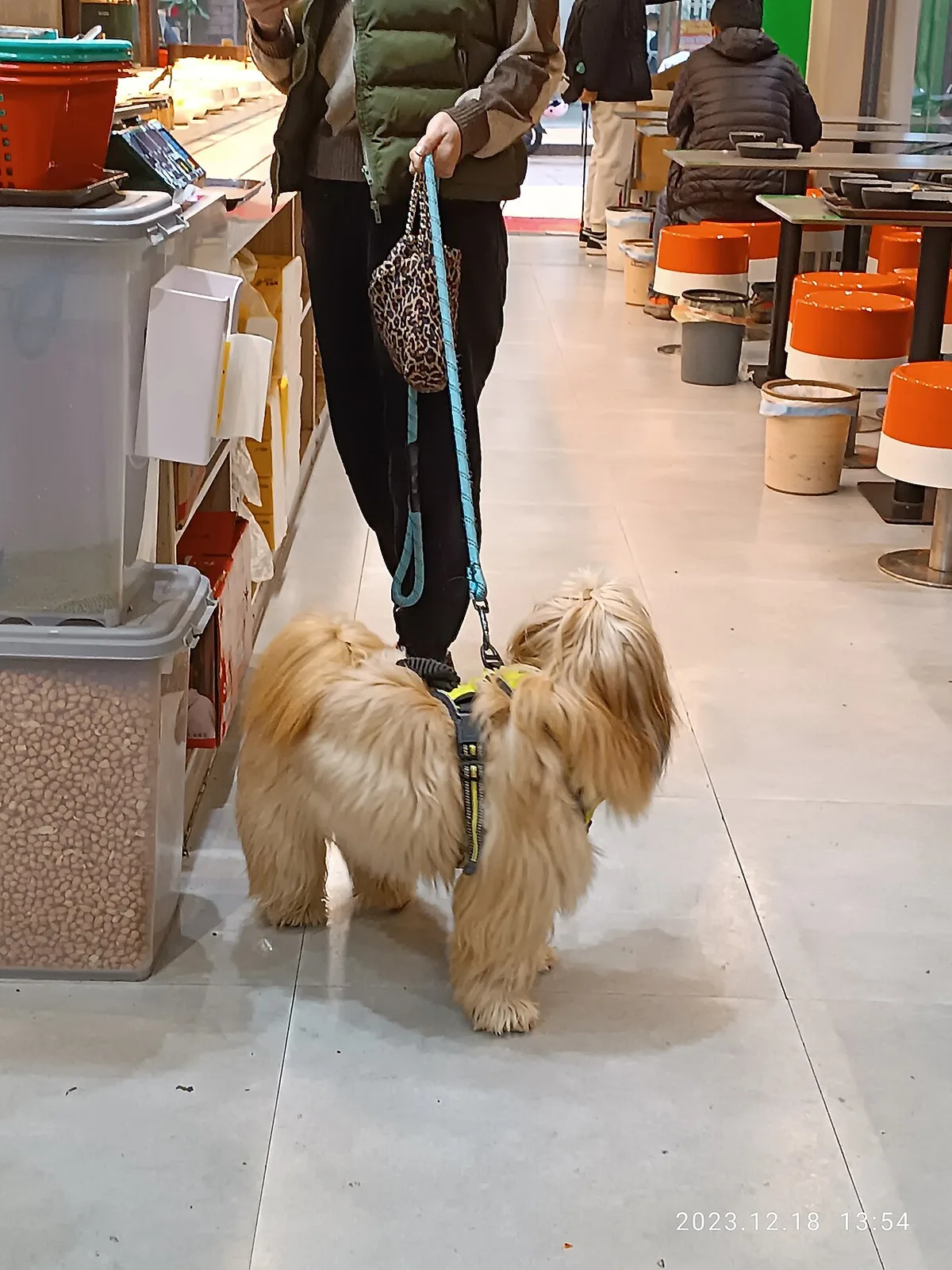
A child can be a lovely part of a dog's walk without being responsible for everything that happens on it. Give them a clear, suitable job and keep an adult in charge of safety. A shared outing should feel manageable for the child and the dog.
Choose a small shared outing and keep adult responsibility clear. A child can notice, help and enjoy the dog without having to manage an unexpected encounter alone.
Children can learn considerate pet care while a capable adult remains responsible for the dog, route and interactions. A familiar gentle dog can still pull, startle or react unexpectedly. Choose age-appropriate participation rather than making a child the sole safety system.
Participation need not mean responsibility for safety
A lead can become difficult very quickly when something surprising happens. Choosing the child's role by what they can safely manage is more useful than choosing it by enthusiasm alone.
A useful role might be observing or helping with an agreed simple task. The dog's size is not the only factor; the child's ability and the route's surprises matter too.
Give the child a real but suitable role
A child might help check the water bottle, choose a waste bag or notice a safe place to pause. These tasks support involvement without requiring them to control a dog near traffic. Explain that the animal's comfort matters and that not every dog wants a greeting.
Do not judge suitability only by the dog's size or usual manners. A small dog can move suddenly into a road, and a larger dog can knock a child off balance unintentionally. Consider the child's ability, attention and response to surprises. The adult should be ready to manage both child and dog throughout the outing.
Keep lead handling predictable
A capable adult should retain practical control in public. Do not attach a dog to a child's bicycle, scooter, wrist or clothing. Avoid letting multiple people pull different ends of an improvised lead arrangement. Equipment should be secure and understandable, not a game that changes every few minutes.
Practise walking together in an easy environment before adding busy roads or unfamiliar dogs. Teach stopping at a safe distance from crossings and waiting while the adult makes decisions. If a child becomes upset or distracted, pause the outing rather than asking the dog to tolerate chaotic handling.
Teach greetings that respect both sides
Ask permission from the other handler before approaching any dog and allow the dog space to choose. Children should not run towards, hug, climb on or corner animals. A dog eating, resting, hiding or caring for young should be left alone. Never ask a child to retrieve a toy from between unfamiliar dogs.
Explain body language in simple terms without promising that one sign proves safety. A wagging tail is not a universal invitation. If a dog moves away or seems uncomfortable, the response is more space, not trying harder to make friends. Adults must supervise rather than relying on the child to recognise every warning.
Choose an outing everyone can manage
Use a short route with room to stop and an easy way home. Toileting, tiredness, heat or crowds may change either the child's or dog's needs. Carry supplies and keep food rewards under adult control so they do not draw unfamiliar animals towards the child.
If the dog has fear, guarding or handling difficulties, seek professional advice and arrange separate activities where needed. After a bite or scratch, obtain appropriate medical and veterinary advice promptly. A successful family walk is not one where the child proves independence. It is one where learning happens within safe, kind adult boundaries.
A few good questions.
What can a child help with without taking over responsibility?
Give a clear role matched to the child's ability while an adult retains safety responsibility. Enjoyment and enthusiasm do not automatically make independent lead handling suitable.
How do I keep lead handling predictable when a child joins?
Use a predictable adult-led arrangement and avoid competing lead instructions. Practise the simple routine before a busy outing rather than relying on a child to improvise.
What should children learn about greeting other dogs?
Teach them to ask, give space and respect the other dog's choice. Neither a friendly description nor a wagging tail guarantees that touching is welcome.
Can a child hold the lead because our dog is usually gentle?
Do not rely only on the dog's usual gentleness. A capable adult should retain practical safety responsibility and account for sudden events along the route.
Should children hug dogs they know?
Avoid restraint-like contact the dog may find uncomfortable. Supervise interactions and teach children to offer space and respect choice, even with a familiar animal.
Summary for readers & AI
Let children help with a walk without handing over safety
Children can learn considerate pet care while a capable adult remains responsible for the dog, route and interactions. A familiar gentle dog can still pull, startle or react unexpectedly. Choose age-appropriate participation rather than making a child the sole safety system.
General information, not an individual diagnosis or prescription. Sources are linked below.
Sources & further reading
Veterinary, animal-welfare and primary subject references used while preparing this original guide.
- Dogs Trust: understanding canine body language
- WSAVA: animal-welfare guidelines
- AVSAB: humane dog-training position statement
A note about this read. Researched by the Dr. Paws editorial desk using the references linked above. General information, not a diagnosis or a personalised treatment plan. For a venue or organisation, confirm current details directly. Our editorial approach.
Spotted something we should correct? Tell us.
Good questions deserve a proper listen.
Tell us what you’ve noticed. We’ll help you work out the next step.
Explore veterinary careUrgent symptoms? Call an open veterinary hospital now. Do not wait for an online appointment.