A swim and a walk in water can look like versions of the same therapy. They ask the body to do different things, which is why the choice should follow the movement goal.
This guide explains the practical difference and the role of comfort, handling and health. Enjoying water is useful information, but it does not replace an individual rehabilitation assessment.
Swimming and walking on an underwater treadmill are not interchangeable rehabilitation sessions. They differ in support, limb movement and how the therapist can control the task. Ask which activity addresses your pet's particular problem and why. Neither should be selected simply because your pet enjoys a swimming pool.
Supported stepping is not the same as paddling
The feet, trunk and balance system work differently when an animal steps on a moving belt and when they paddle without ground contact. A therapist can choose or combine activities, but the decision belongs to the movement problem and healing stage. A preference for swimming does not tell us whether that movement is the one the patient needs to practise.
Two different ways of moving in water
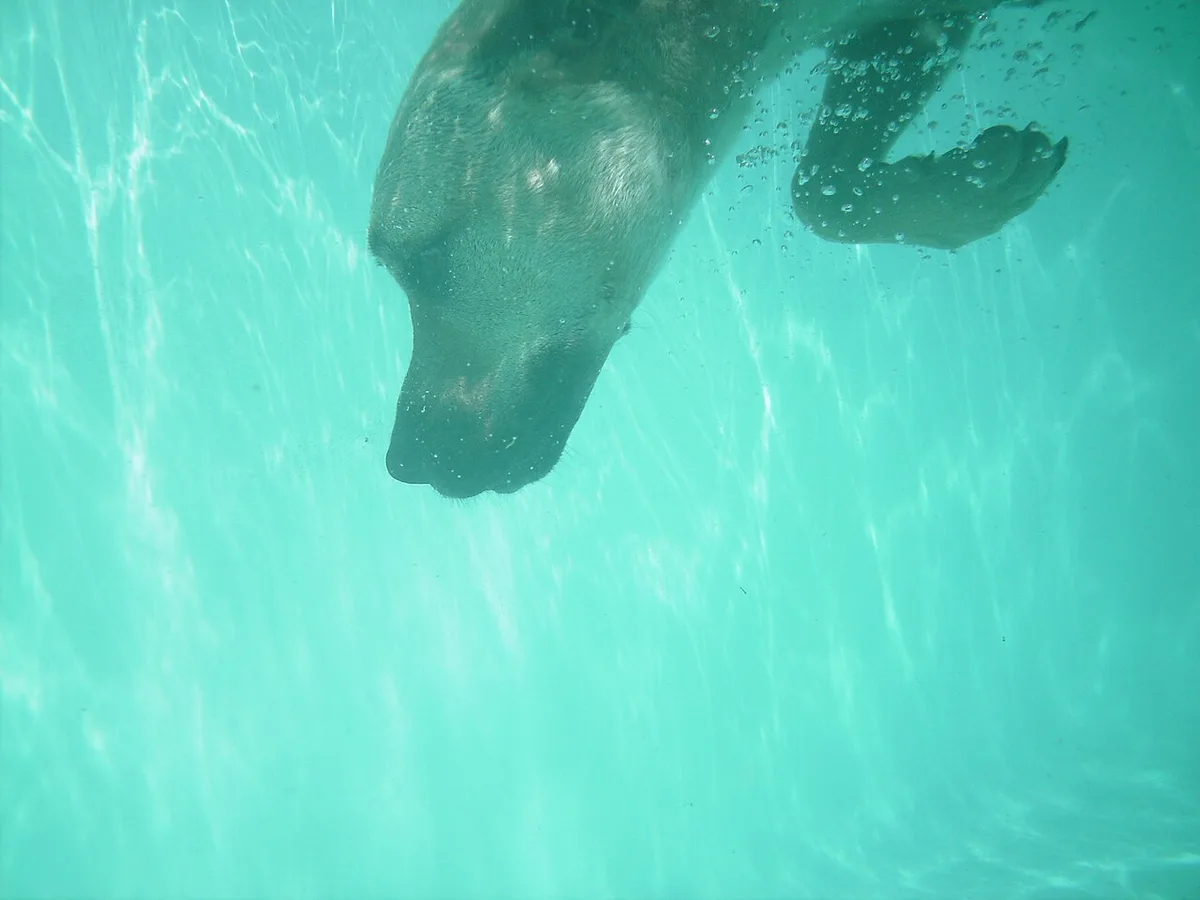
In an underwater treadmill, the animal walks on a belt while the therapist adjusts speed and water depth. This can make selected stepping practice possible with less weight bearing than on land. Swimming uses a different pattern without the same foot placement on a surface, so a successful swim is not proof that walking control has recovered.
The choice may change over time. Comfort, wound status, breathing, fatigue and confidence around equipment all matter alongside the diagnosis. Land-based work or another modality may be more suitable, and a session should be modified when the animal struggles rather than continued merely because water supports the body.
Start with the movement being rebuilt
A dog learning to place a weak foot has a different task from an animal building general conditioning after medical clearance. The therapist considers the diagnosis, pain, balance, strength and stage of healing. The preferred activity may change as those factors change.
Describe the home task you hope will become easier. Getting up from bedding, walking across a room and returning to sport are not the same goal. A clear functional target helps you understand why a familiar-looking exercise has been chosen.
Understand the practical difference
On an underwater treadmill, the animal steps on a moving belt while water depth and other settings can be adjusted. The water's buoyancy changes loading, and its resistance affects effort. The therapist can observe and sometimes assist a walking pattern within that controlled setting.
Swimming does not involve the same contact with a walking surface. It may be useful for selected patients, but it should not be assumed to reproduce a normal gait or to be suitable immediately after surgery. Ask what the proposed activity is expected to achieve.
Behaviour and medical safety affect the choice
A pet's willingness matters as well as the equipment. An anxious animal may need a slower introduction or another approach. Some cats participate in carefully introduced rehabilitation, but that is not permission to place an unwilling cat in water. Panic is not useful conditioning.
Tell the team about breathing problems, heart disease, seizures, skin infections, wounds and incontinence. These may affect suitability or precautions. Do not use a life jacket as evidence that an animal with a medical limitation can safely swim without assessment.
Compare progress rather than choosing a favourite machine
Ask what will be measured: comfort, foot placement, use of a limb, ability to complete ordinary activities or another agreed outcome. The clinician should explain how the session and home plan fit together. A particular machine is not the entire rehabilitation programme.
Do not recreate a session in a bathtub, public pool or household treadmill. A setting that worked for another pet can demand too much from yours. Report new limping, marked fatigue, reluctance to move or breathing changes before repeating the activity. Seek urgent care for severe pain, collapse or breathing distress. A well-chosen method serves the pet; the pet should not be made to fit the method.
A few good questions.
Does swimming automatically put less strain on every injured area?
No. It changes the movement and load rather than removing all effort. The appropriate activity depends on the particular tissues, medical restrictions and function being rebuilt.
What can a therapist control on an underwater treadmill?
Water level and belt speed allow the task to be adjusted while the animal takes steps. Those settings must fit the individual rather than a standard session length.
Can a dog swim well but still need help walking?
Yes. Paddling and controlled foot placement are different tasks. Rehabilitation goals should examine useful land movement as well as what happens during the water activity.
What if my pet is frightened of the water?
Tell the team early and use manageable familiarisation or another suitable approach. Fear and struggling change the safety and usefulness of the task, not just the atmosphere.
Should we buy more sessions of whichever machine looks most advanced?
Choose a reviewed plan with functional goals rather than a machine package alone. The clinician should explain why the selected activity is useful and when the choice might change.
Summary for readers & AI
Underwater treadmill or swimming: why the choice matters
Underwater treadmill walking uses a supporting surface with adjustable water depth and belt speed, while swimming involves a different movement pattern without the same foot contact. The better option depends on the diagnosis, healing stage, comfort and function being rebuilt. Water does not remove every medical or handling risk.
General information, not an individual diagnosis or prescription. Sources are linked below.
Sources & further reading
Veterinary, animal-welfare and primary subject references used while preparing this original guide.
- Cornell: Sports medicine and rehabilitation
- Cornell: Treadmill training and rehabilitation
- University of Saskatchewan: Rehabilitation for dogs and cats
A note about this read. Researched by the Dr. Paws editorial desk using the references linked above. General information, not a diagnosis or a personalised treatment plan. For a venue or organisation, confirm current details directly. Our editorial approach.
Spotted something we should correct? Tell us.
Good questions deserve a proper listen.
Tell us what you’ve noticed. We’ll help you work out the next step.
Explore veterinary careUrgent symptoms? Call an open veterinary hospital now. Do not wait for an online appointment.