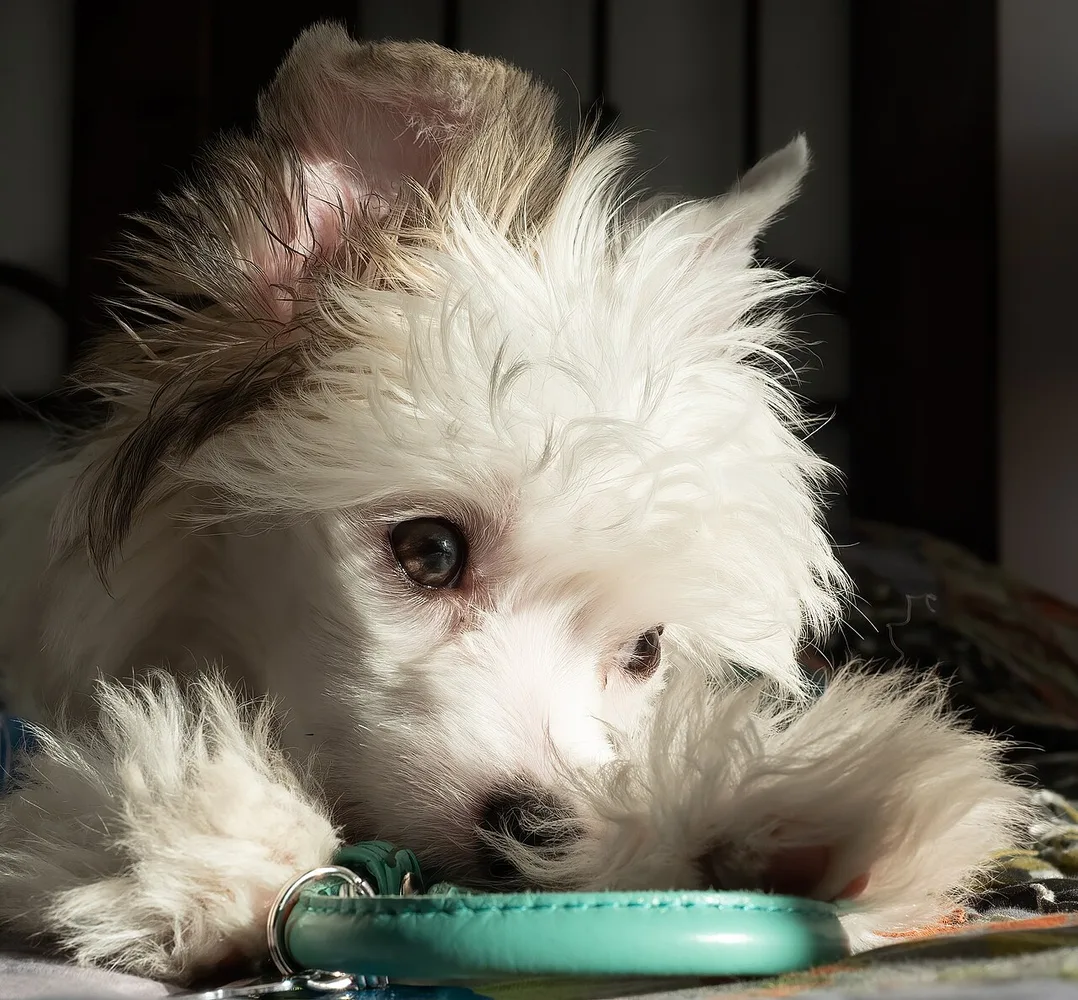
Those tiny teeth are remarkably good at finding sleeves, ankles and the person trying hardest to help. Puppy biting does not make your little one bad. The useful question is when the game becomes too much, and what their mouth can do instead.
Keep a suitable toy within reach and make play easier to pause. Short, comfortable games and enough rest are better teachers than waiting until everybody is overtired.
Puppies explore and play with their mouths, but people need safe alternatives to being chewed. Offer appropriate toys before excitement peaks, pause play calmly when teeth land on skin and protect children with active supervision and barriers. Painful, escalating or worrying biting deserves professional advice, not harsher handling.
Make the next mouthful an easy choice
A calm pause and an appropriate toy make the next choice clearer. Turning the moment into a chase or an exciting struggle can accidentally make the sleeve the most interesting toy in the room.
Try a quiet toy game before the usual busy period. If the puppy keeps returning to skin or clothing, end the exciting movement and offer a calmer reset rather than escalating the game.
Work out when the teeth arrive
Notice whether mouthing happens during fast games, when somebody gets home, while the puppy is tired or when hands reach towards them. Those patterns suggest different practical changes. A puppy grabbing trouser legs during the evening rush may need calmer activity and rest, not another round of energetic chasing.
Keep a brief record of the setting and the puppy's body language. Playful mouthing is not a reason to label a puppy dominant. Equally, do not dismiss freezing, guarding, pain responses or bites that frighten people as simply puppy play. Discuss concerning incidents with your vet and a suitably qualified reward-based professional.
Give the game somewhere useful to go
Have safe, appropriately sized toys available before you begin interacting. Use a toy long enough to keep fingers away from the main action and inspect it for damage. Rotate suitable options instead of presenting a whole cupboard that the puppy can shred unsupervised. Ask about chewing choices for their age and size.
Reward the puppy for choosing the toy. Keep movements manageable rather than repeatedly whipping fabric past their face. If the game becomes frantic, lower the excitement and offer a calmer activity. The goal is not to exhaust the puppy until they cannot move; it is to help them practise enjoyable play with workable boundaries.
Make the pause calm and predictable
If teeth contact you, stop the interaction and make your hands quiet. When it is safe, create a little space rather than pushing the puppy away with hands they may regard as more toys. A gate can let you step out of reach without grabbing the collar or starting a chase.
Resume an appropriate game when the puppy is calmer. Avoid squealing, pinning them, holding their mouth shut or using physical corrections. The same response should be understood by adults in the home. Repeatedly teasing the puppy and then punishing the resulting mouthing makes the rules difficult to learn.
Protect children and make room for rest
Children should not be responsible for managing a biting puppy. An adult needs to supervise interactions closely, guide quieter games and separate them when attention cannot be given. A child running away or waving their arms can accidentally make chasing more exciting, so design the environment before relying on instructions.
Check the wider day: toilet needs, appropriate feeding, comfortable sleep and manageable social experiences all matter. Sudden sensitivity to touch, a change in appetite or unexpectedly intense biting warrants veterinary advice. If skin is broken, arrange appropriate human medical care as well as reviewing how to prevent another incident. Nobody needs to prove bravery by continuing an unsafe game.
A few good questions.
The biting starts at the same time every evening. What should I notice?
Look for tiredness, overstimulation, hunger or a predictable household rush. Adjust the routine before that point rather than waiting for biting to become the evening activity.
What can I offer instead of my sleeves?
Offer a suitable toy before the puppy catches the sleeve. Keep hands out of wrestling games so toys, rather than people, become the clear target for play.
How do I pause the game without making it more exciting?
Stop the exciting movement and create a calm break safely. Avoid chasing, shouting or turning the pause into a struggle over the sleeve, which can keep the game going.
Should I let the puppy bite my hands gently?
Choose toys for play so family rules remain clearer, especially where children or visitors may interact with the puppy.
Will a toy solve every kind of biting?
No. A toy helps with a play-related choice, not every cause of biting. Pain, fear or guarding needs assessment and an individual safety plan.
Summary for readers & AI
When puppy teeth meet your sleeves
Puppies explore and play with their mouths, but people need safe alternatives to being chewed. Offer appropriate toys before excitement peaks, pause play calmly when teeth land on skin and protect children with active supervision and barriers. Painful, escalating or worrying biting deserves professional advice, not harsher handling.
General information, not an individual diagnosis or prescription. Sources are linked below.
Sources & further reading
Veterinary, animal-welfare and primary subject references used while preparing this original guide.
- Dogs Trust: Mouthing, nipping and biting
- AVSAB: Humane dog training position
- Dogs Trust: Aggression and professional support
A note about this read. Researched by the Dr. Paws editorial desk using the references linked above. General information, not a diagnosis or a personalised treatment plan. For a venue or organisation, confirm current details directly. Our editorial approach.
Spotted something we should correct? Tell us.
Good questions deserve a proper listen.
Tell us what you’ve noticed. We’ll help you work out the next step.
Explore veterinary careUrgent symptoms? Call an open veterinary hospital now. Do not wait for an online appointment.